
Iranian authorities have closed national airspace following recent military strikes, a move that has significantly disrupted international aviation traffic across key corridors linking Europe, Asia, and the Middle East. The decision was announced by the country’s civil aviation body, which cited immediate security concerns and the need to protect civilian aircraft.
Airlines were instructed to suspend all arrivals and departures until further notice. Flight tracking data showed numerous commercial aircraft rerouting to avoid Iranian territory, leading to longer travel times and increased operational costs for carriers. Major transit hubs across the Gulf region experienced congestion as planes were diverted.
Industry analysts note that Iranian airspace serves as an important transit route for flights connecting Western Europe with South Asia and East Asia. Closure of this corridor forces airlines to adopt alternative paths over Central Asia or the Arabian Peninsula, adding fuel expenses and logistical complexity.
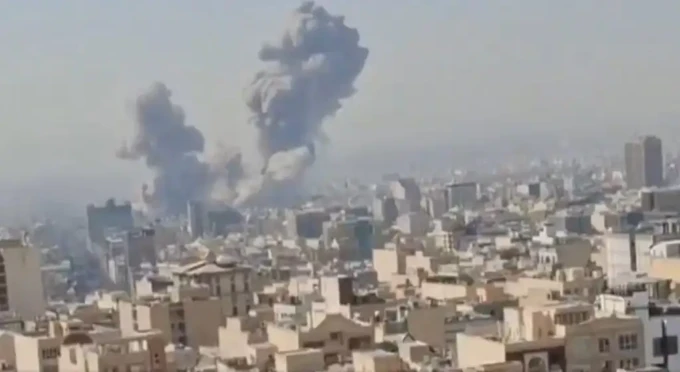
The airspace shutdown follows reports of explosions and missile activity in several parts of the country. Officials emphasized that the measure is temporary but provided no timeline for reopening. Neighboring states have also reviewed their aviation risk assessments, with some issuing updated advisories to airlines operating in the region.
Global aviation authorities are coordinating closely with carriers to ensure passenger safety. International regulators have previously issued guidance during periods of heightened regional tension, urging airlines to conduct thorough risk evaluations before entering affected zones.
The disruption has broader economic implications. Cargo flights transporting goods between continents have also been affected, potentially delaying shipments of industrial components and consumer products. Logistics companies are monitoring the situation closely as they adjust supply chains.
Financial markets reacted to the development by pricing in additional geopolitical risk. Energy traders expressed concern that prolonged inility could threaten shipping routes in nearby maritime channels, amplifying uncertainty.
Diplomatic efforts to reduce tensions are ongoing, but aviation experts caution that airspace closures often persist until security conditions ilize. Airlines and travelers alike now face uncertainty as authorities balance operational needs with safety considerations.











Leave a comment