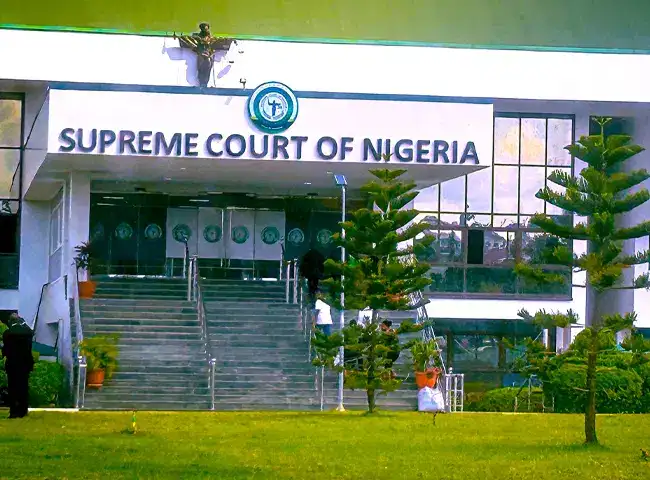
The Supreme Court of Nigeria has reserved judgment in a series of appeals and cross appeals stemming from the leadership crises rocking the Peoples Democratic Party and the African Democratic Congress, after hearing arguments from all parties involved.
The apex court did not announce a date for its ruling, a development with significant implications for both parties as they prepare for the 2027 general elections.
In the PDP, earlier court decisions have already reshaped the party’s leadership structure. Judgments nullified the Ibadan convention that produced Kabiru Turaki as national chairman and upheld the suspension of key officials, including Samuel Anyanwu. As it stands, the faction aligned with Nyesom Wike and recognized by the Independent National Electoral Commission remains in control pending the final verdict.
However, the situation appears more precarious for the ADC, where none of the rival factions led by David Mark, Nafiu Bala Gombe, and Ogga Temitope has been officially recognized by INEC. This lack of recognition raises concerns about the party’s eligibility to participate in the 2027 elections.
All registered political parties are required to submit their membership registers to INEC by May 10. Failure to meet this deadline could disqualify any party from fielding candidates, meaning the ADC risks being excluded from the ballot if the court does not deliver its judgment in time.
Following the proceedings, the Turaki led PDP faction expressed confidence in the judiciary, with its spokesman affirming faith in the court to deliver justice and uphold democratic principles.
Similarly, representatives of the Mark led ADC faction voiced optimism about a favorable ruling, noting that the court appeared mindful of the urgency surrounding the case.
The legal dispute in the ADC centers on whether courts have jurisdiction over internal party matters, a position strongly argued by Mark’s legal team. Meanwhile, INEC has maintained neutrality, removing names of disputed party leaders from its official records pending judicial resolution.
Observers say the eventual rulings could have far reaching consequences for party ility, electoral participation, and the broader political landscape as Nigeria moves c to the 2027 general elections.









Leave a comment