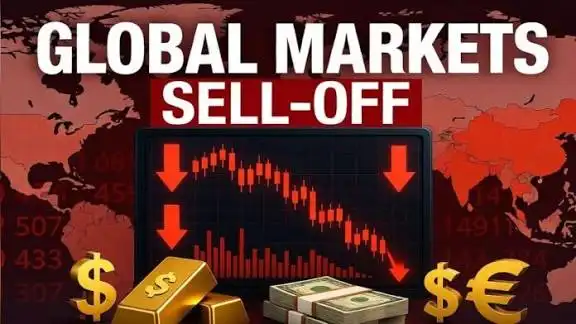
Global stock markets declined sharply on Friday as escalating conflict in the Middle East intensified investor anxiety and triggered widespread sell offs across major financial centers. Equity indices in Asia, Europe, and North America closed lower as traders responded to mounting geopolitical uncertainty and rising energy prices.
Market participants cited concerns that continued military exces involving Iran, Israel, and the United States could disrupt global trade flows and strain economic growth. Investors shifted capital toward perceived safe haven assets such as gold and government bonds, driving yields lower in several developed markets.
On Wall Street, major benchmarks recorded losses amid heavy trading volumes. European bourses followed a similar pattern, with declines in energy intensive sectors and transportation stocks reflecting fears of sustained high oil prices. Asian markets had earlier set the tone for the downturn, reacting to overnight developments in the region.
Analysts said the sell off was not limited to companies with direct exposure to the Middle East. Broader risk aversion spread across technology, manufacturing, and consumer sectors, highlighting how geopolitical shocks can reverberate through interconnected global markets. Financial institutions also faced pressure as volatility spiked and investors reassessed credit risk.
Currency markets reflected shifting sentiment. The United States dollar strengthened against several major currencies as investors sought liquidity and ility. Emerging market currencies weakened in some cases, particularly in economies reliant on energy imports.
Energy prices remained elevated during the trading session, reinforcing inflation concerns. Economists warned that sustained increases in fuel costs could complicate monetary policy decisions for central banks already navigating delicate growth and inflation balances.
Despite the sharp declines, some market strategists cautioned against overreaction. They noted that previous geopolitical crises have often produced short term volatility followed by partial recoveries once clearer information emerged. Much will depend on whether diplomatic efforts succeed in containing the conflict or whether further escalation unfolds.
Government officials in several countries reiterated calls for restraint and emphasized the resilience of their financial systems. Central banks indicated they are closely monitoring market conditions, though no emergency measures were announced.
As investors brace for potential additional developments over the weekend, attention remains fixed on both military updates and diplomatic initiatives. For now, global equity markets continue to reflect heightened uncertainty in an environment shaped by conflict and rapidly evolving geopolitical risk.











Leave a comment