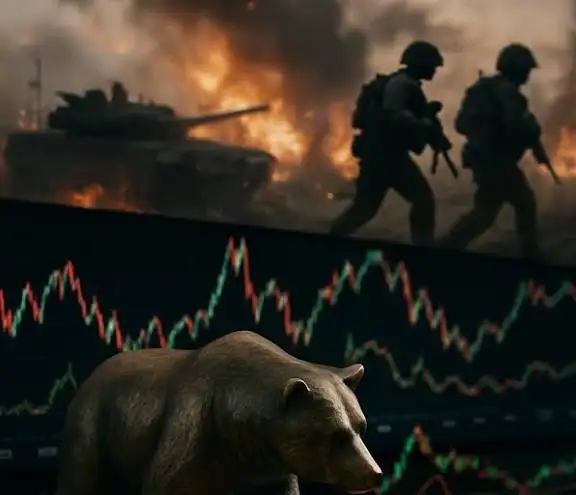
Financial markets around the world are experiencing increased volatility as geopolitical tensions and the risk of expanding conflict continue to influence investor sentiment. The growing uncertainty surrounding the escalating situation in the Middle East has led to sharp fluctuations across global stock markets, commodities, and currency exces. Investors are reacting cautiously as they attempt to assess the potential economic impact of prolonged inility and possible disruptions to critical trade routes and energy supplies.
Market analysts say geopolitical developments have become one of the primary drivers of short term market behavior. News related to military actions, diplomatic responses, and regional security developments has been triggering immediate reactions in global financial markets. Traders are closely monitoring developments as governments respond to the crisis and as the possibility of further escalation remains uncertain. This heightened sensitivity has contributed to rapid shifts in asset prices across multiple sectors.
Energy markets have been among the most directly affected. Oil prices have shown sharp movements as concerns grow about the safety of key shipping routes and production facilities in the Middle East. The region plays a central role in global energy supply, and any threat to oil exports or transportation infrastructure can quickly influence international prices. These fluctuations in energy markets are having a ripple effect on broader financial markets, particularly for industries that rely heavily on fuel costs.
Equity markets have also experienced periods of inility as investors move funds between riskier assets and safer alternatives. Technology companies, airlines, shipping firms, and energy producers are among the sectors most sensitive to geopolitical developments. Airline and logistics companies face operational challenges when airspace closures or shipping disruptions occur, while energy firms can benefit from higher oil prices but remain exposed to long term market uncertainties.
In response to the volatility, many investors are shifting portions of their portfolios toward assets traditionally viewed as safe during times of geopolitical stress. Government bonds, certain currencies, and other defensive financial instruments have seen increased demand as market participants seek ility. Financial institutions and asset managers are advising clients to prepare for continued fluctuations as the global political environment remains unpredictable.
Central banks and financial regulators are also monitoring the situation closely. Although monetary policy decisions are typically driven by economic indicators such as inflation and employment, geopolitical shocks can influence financial ility and economic growth projections. Policymakers are assessing whether prolonged conflict could affect global trade, investment flows, and energy costs in ways that might require adjustments to economic strategies.
Economists warn that sustained volatility could have broader implications for the global economy if uncertainty persists. Businesses may delay investment decisions, consumers could reduce spending, and international trade flows might be affected by rising transportation costs or security risks. While markets have historically adapted to geopolitical crises, the scale and complexity of current tensions are making forecasting particularly challenging.
For now, financial markets remain highly sensitive to developments on the geopolitical stage. As new information emerges and diplomatic efforts continue, investors around the world are preparing for an environment in which uncertainty and rapid market shifts may remain a defining feature of the global economic landscape.











Leave a comment