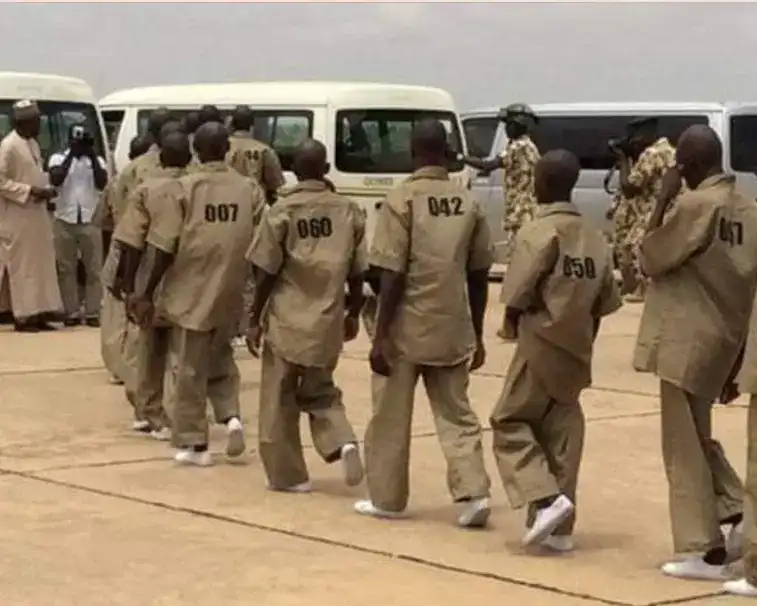
Nigeria’s fragile security landscape has once again come under intense scrutiny following the graduation and reintegration of 744 former insurgents under the military’s deradicalization initiative, Operation Safe Corridor. While authorities present the move as a pathway to peace, many citizens see it as a deeply troubling development.
Across communities in Benue State, Plateau State, Taraba State, and Kwara State, the wounds of terrorism remain raw. Villages destroyed by insurgents and families torn apart by violence serve as painful reminders of the human cost of insecurity. Against this backdrop, the decision to reintegrate former fighters has sparked widespread outrage.
The programme, conducted in Gombe State, involved a 24 week rehabilitation process aimed at deradicalizing participants and preparing them for reintegration into society. However, critics question whether such a short period is sufficient to reform individuals once involved in violent extremism linked to groups like Boko Haram.
Public reaction has been swift and emotional, particularly on social media platform X. Many Nigerians argue that the policy appears to prioritize perpetrators over victims, raising concerns about justice and fairness. Some fear that reintegrated individuals could pose security risks if monitoring systems fail or if they relapse into violence.
Others question the broader implications for Nigeria justice system. Why, they ask, do individuals accused of lesser crimes remain in prolonged detention while those linked to terrorism are granted a second chance? The perception of unequal treatment risks eroding trust in public institutions.
There are also practical concerns. With high unemployment across the country, skeptics wonder how reintegrated individuals will sustain themselves. Without le livelihoods, the risk of returning to criminal activity remains a serious possibility.
Supporters of the initiative argue that military force alone cannot end insurgency and that deradicalization offers a complementary strategy. Yet, even among those open to the idea, there is a strong call for transparency, strict monitoring, and community involvement to ensure lasting success.
As Nigeria navigates this delicate balance between justice and reconciliation, the reintegration programme stands as both a bold experiment and a potential risk. For many citizens, the hope is that this approach brings lasting peace rather than deepening existing fears.












Leave a comment