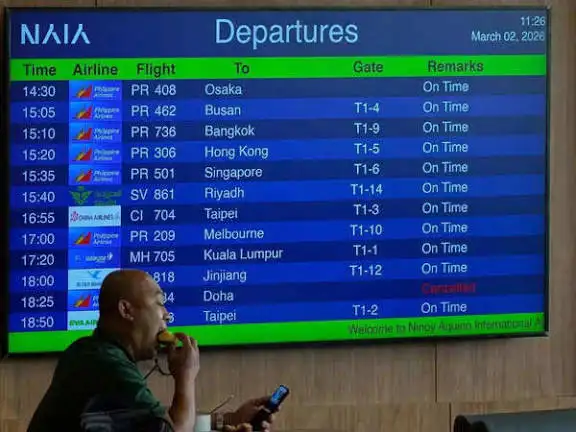
International travelers are facing major disruptions as the ongoing conflict in the Middle East has forced widespread cancellations and rerouting of flights across the region. Airlines operating routes to and from Israel, Iran, and neighboring nations have temporarily suspended services, leaving thousands stranded and scrambling to adjust travel plans.
Airport authorities reported congestion at major hubs, with passengers experiencing long queues and delays as flights were rescheduled or diverted. Airlines cited security concerns and airspace restrictions due to missile and drone activity, emphasizing that safety remains the highest priority. Some carriers are arranging alternative connections through safer transit points to accommodate affected travelers.
Governments have issued advisories warning against non essential travel to conflict zones. Embassies are coordinating with nationals to provide guidance, including emergency contact points and information on temporary shelters. Travel insurance companies have noted an uptick in claims related to disrupted itineraries and transportation delays.
The disruption has extended beyond regional travel, affecting intercontinental flights connecting Europe, Asia, and North America. Freight operations have also been impacted, with some cargo rerouted or delayed, creating additional challenges for global supply chains. Airlines are reassessing risk exposure and revising flight schedules in response to evolving threats.
Experts emphasize that the crisis highlights the vulnerability of civil aviation to geopolitical tensions. Even localized conflicts can have cascading effects on international mobility, tourism, and commerce. Travelers are advised to remain informed, monitor official updates, and exercise flexibility as airlines and authorities respond to rapidly cing circumstances.











Leave a comment