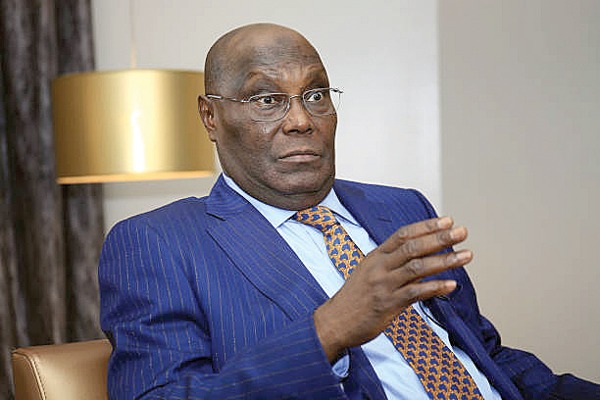
Atiku Abubakar’s political journey has been marked by both significant challenges and notable triumphs, reflecting his resilience and enduring ambition in Nigeria’s complex political landscape. Born on November 25, 1946, in Jada, Adamawa State, Abubakar’s early life was shaped by his father’s opposition to Western education. Despite this, he pursued his education, eventually earning a Master’s degree in International Relations from Anglia Ruskin University in 2021. (en.wikipedia.org)
Abubakar’s political career began in the early 1980s when he worked behind the scenes on the governorship campaign of Bamanga Tukur. His formal entry into politics was marked by his election as National Vice-chairman of the People’s Front of Nigeria in 1989. Although the People’s Front was denied registration, Abubakar’s political trajectory continued to ascend. In 1993, he contested the Social Democratic Party (SDP) presidential primaries but was defeated by Moshood Abiola. Despite this setback, he remained undeterred, securing the governorship of Adamawa State in 1998. Before his inauguration, he accepted the position of running mate to Olusegun Obasanjo in the 1999 presidential election, which they won, marking the beginning of his tenure as Vice President from 1999 to 2007. (en.wikipedia.org)
During his vice presidency, Abubakar played a pivotal role in Nigeria’s economic reforms, chairing the National Economic Council and leading the National Council on Privatization. However, his relationship with President Obasanjo soured over the latter’s attempt to amend the constitution for a third term, leading to Abubakar’s departure from the People’s Democratic Party (PDP) in 2006. He joined the Action Congress of Nigeria (ACN) and contested the 2007 presidential election but was unsuccessful. Undeterred, he returned to the PDP in 2011 and contested the presidential primaries, losing to Goodluck Jonathan. In 2014, he left the PDP for the All Progressives Congress (APC) but returned to the PDP in 2017. He was the PDP’s presidential candidate in the 2019 and 2023 elections, both times finishing as the runner-up. (en.wikipedia.org)
Abubakar’s political odyssey has been characterized by his unwavering commitment to democratic principles and his resilience in the face of electoral defeats. His legal battles, including challenging the 2023 election results, underscore his determination to uphold what he perceives as the sanctity of the electoral process. Despite facing criticism for his frequent party switches and perceived opportunism, Abubakar’s influence on Nigeria’s political landscape remains significant. His journey reflects the complexities of Nigerian politics and the challenges inherent in navigating its ever-evolving dynamics. (guardian.ng)








I disagree with the articles portrayal of Atiku Abubakars political journey as solely bold. Lets not overlook his controversies.
Atiku Abubakars journey is inspiring, but lets not overlook his controversies. Is he truly the leader Nigeria needs? Lets discuss.
I believe Atikus political journey has been filled with controversy and questionable decisions. Lets discuss his triumphs critically.
I dont buy the idea that Atikus journey is all triumphs. We need to look at the challenges hes faced objectively.
Wow, Atiku Abubakars journey is definitely controversial. Do you think he has truly triumphed or just faced more challenges? Lets discuss!
Is Atiku Abubakar truly a bold political figure or just another opportunist? Lets discuss this in detail!