
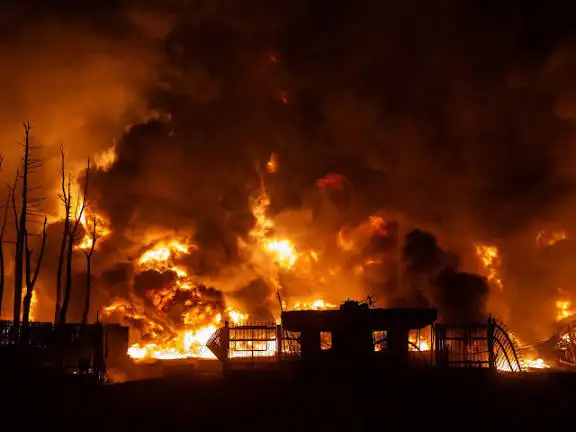
Global oil markets are experiencing significant upward pressure as the ongoing conflict involving Iran continues to disrupt energy supply routes and raise concerns about production and transportation across the Middle East. Traders and analysts report that benchmark crude prices have surged by roughly twenty five percent in recent days as uncertainty grows over the ility of one of the world’s most important energy producing regions. The rapid rise in prices has already begun to influence financial markets, government policy discussions, and business planning across multiple sectors of the global economy.
Energy analysts say the sharp increase reflects widespread concern that the conflict could interfere with the steady flow of oil shipments from major producers in the Persian Gulf. The region accounts for a large share of global crude exports, and any disruption to its production facilities or shipping routes can quickly influence supply levels. Market participants are closely watching developments around key maritime corridors and energy infrastructure while trying to estimate how long the current tensions may continue.
Commodity traders have reacted quickly to the shifting situation. As uncertainty spreads, many investors move toward oil futures as a way to hedge against potential shortages. This activity has intensified the price surge while adding volatility to trading sessions across major commodity exces. Financial institutions are also updating forecasts to account for the possibility that sustained geopolitical pressure in the region could keep energy prices elevated for an extended period.
The rising cost of oil is already beginning to affect industries that rely heavily on fuel, including transportation, aviation, and manufacturing. Businesses around the world are evaluating how higher energy expenses may influence operational costs and consumer prices. Governments are also monitoring the situation carefully, as sustained increases in oil prices can lead to broader economic challenges such as rising inflation and slower economic growth.
Economists note that the global economy remains sensitive to sudden ces in energy costs. Many countries are still managing the effects of recent economic disruptions, and a prolonged period of elevated oil prices could place additional strain on households and businesses. Policymakers in several nations have begun discussing possible measures to ilize markets and ensure sufficient energy supplies if the situation in the Middle East continues to affect global oil flows.












Leave a comment