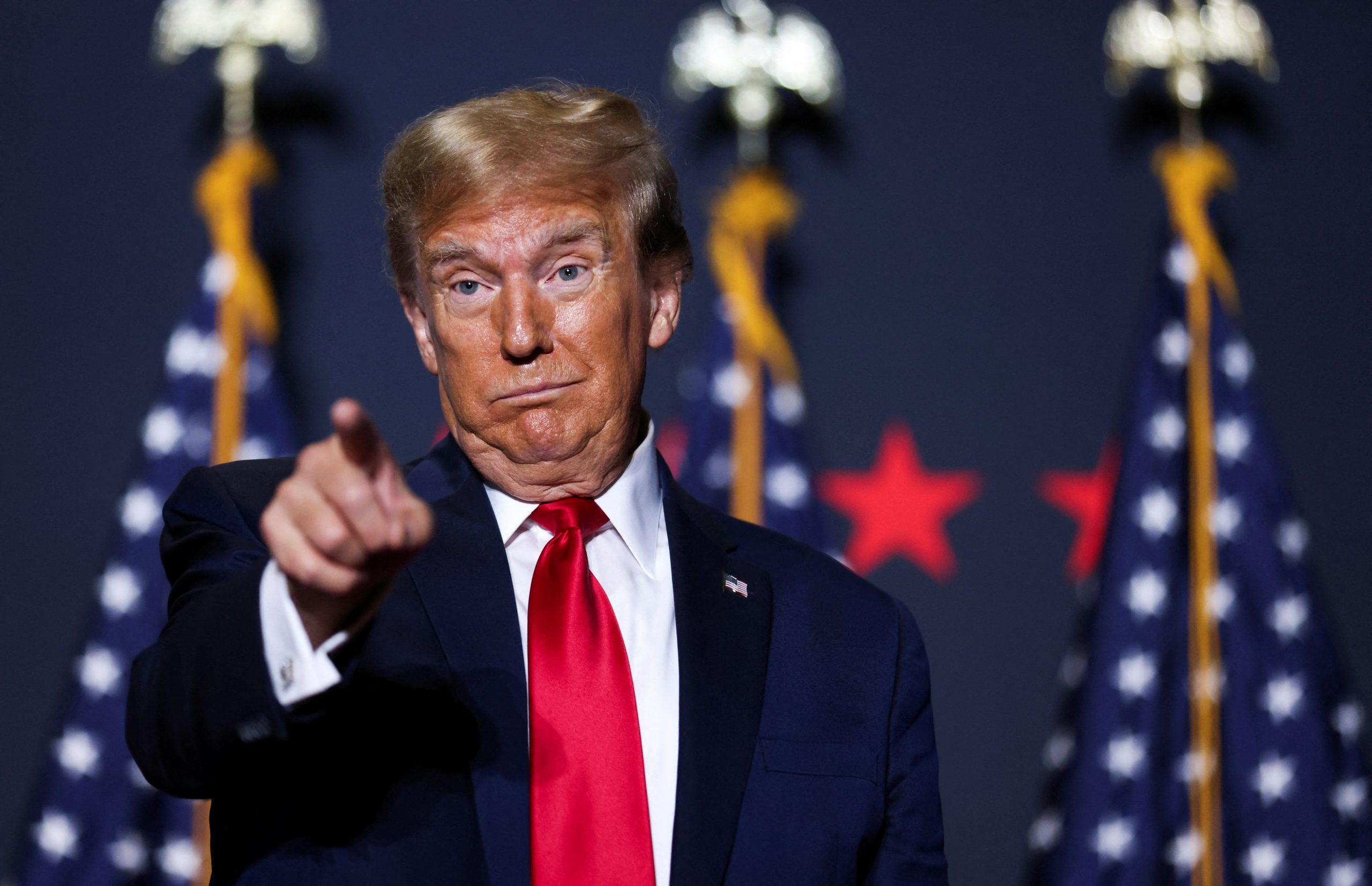
President Donald Trump signed an executive order aimed at accelerating domestic pharmaceutical manufacturing, addressing national security concerns over reliance on foreign drug production. The order, first reported by The Washington Post, directs the U.S. Food and Drug Administration (FDA) to streamline approvals for new U.S.-based plants by eliminating redundant requirements and providing early support to manufacturers. It also mandates the Environmental Protection Agency (EPA) to expedite construction permits for these facilities, tackling the White House’s estimate of a five-to-ten-year timeline for new plants, deemed “unacceptable” for national security.
The initiative intensifies scrutiny on foreign producers, with FDA Commissioner Marty Makary announcing a shift to unannounced inspections of overseas facilities to align with rigorous U.S. standards. The order further requires the FDA to enforce active pharmaceutical ingrent (API) source reporting by foreign drugmakers and consider publicly listing non-compliant facilities, a move to pressure offshore producers. This follows a Section 232 investigation launched by the Commerce Department on April 1, probing whether pharmaceutical imports—valued at $210 billion in 2024—pose a national security threat, potentially justifying tariffs as high as 25%.
Trump’s push to reshore drug production, underscored by his statement, “We will permanently bring our medical supply chains back home,” responds to the U.S.’s heavy dependence on imported APIs, with 72% of manufacturers located abroad, including 13% in China, per 2019 FDA data. The U.S. imported $203 billion in pharmaceuticals in 2023, 73% from Europe (Ireland, Germany, Switzerland), with generics—91% of U.S. prescriptions—often sourced from India and China. Critics, including Pfizer CEO Albert Bourla, argue that looming tariffs deter U.S. investment, while the Biotechnology Innovation Organization (BIO) warns that 94% of surveyed biotech firms fear higher costs and supply chain disruptions.
The order aligns with recent industry moves, such as Eli Lilly’s $27 billion U.S. facility expansion and Merck’s $1 billion North Carolina plant, but experts like ING’s Stephen Farrelly caution that tariffs may not spur generic drug manufacturing due to low margins and complex supply chains. A Yale Budget Lab study estimates a 25% tariff could raise drug prices by 15%, adding $600 annually per household, risking shortages of critical generics like antibiotics. X posts, including @dogeai_gov, praise the order as a step toward “supply chain sovereignty,” while @HOTELIERCRYPTO_ questions its feasibility given high U.S. labor costs. As Trump signals tariffs within weeks, the policy balances national security with economic risks, with implementation challenges and global trade tensions looming.










I dont get it, is Trump trying to boost Pharma or just playing politics with tariffs? Whats the real deal here? 🤔
I wonder if focusing on domestic manufacturing will really solve the tariff threats. Is it just a band-aid solution?
Why focus on boosting domestic pharma manufacturing when we could be investing in healthcare access for all? priorities, anyone?
I wonder if this executive order will really make a difference or if its just a political move. What do you think?
Im not sure if this executive order will really help or just create more problems. What do you guys think?
Im not so sure boosting domestic pharma is the solution. What about global health equity and access? Just a thought.
I dont get why people are praising Trump for this. Is it really going to help or just a political move? 🤔
I think its great that Trump is focusing on boosting domestic pharma manufacturing, but will it really help amidst tariff threats? Time will tell.