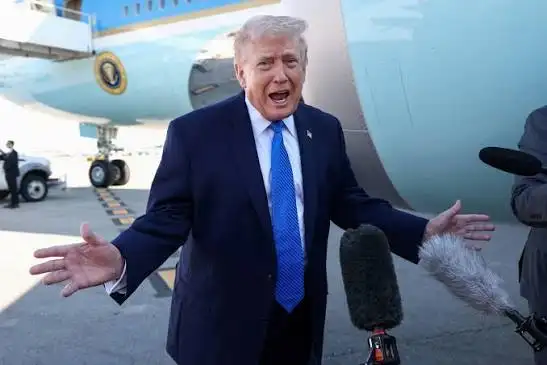
Donald Trump has raised concerns about the level of support provided by NATO allies in the context of rising tensions with Iran, arguing that member states are not contributing enough to shared security responsibilities. His remarks have renewed debate about burden sharing within the alliance and highlighted long standing disagreements over defense commitments among Western partners in an increasingly complex global security environment today.
Speaking during a public appearance, Trump emphasized that the United States continues to carry a disproportionate share of defense obligations while other NATO countries fall short of expectations. He suggested that this imbalance weakens collective strength and could hinder coordinated responses to emerging threats, particularly in regions where strategic interests of alliance members are directly challenged by ongoing geopolitical developments.
Officials from several NATO countries have responded by defending their contributions, noting that commitments extend beyond financial spending to include intelligence sharing, troop deployments, and humanitarian support. They argue that alliance cooperation remains strong despite differences in perspective, and that collective security arrangements are designed to accommodate varying national capabilities and strategic priorities across member states involved in joint efforts.
Security analysts say Trump’s comments reflect broader tensions within NATO regarding funding targets and operational responsibilities. The alliance has long encouraged members to meet specific defense spending benchmarks, yet progress has been uneven. Experts warn that public criticism could strain diplomatic relationships, even as leaders continue to emphasize unity in addressing shared security challenges across multiple regions of strategic importance globally.
The situation comes at a time when tensions involving Iran have added complexity to international relations, prompting calls for coordinated responses among allied nations. Some policymakers believe that stronger alignment within NATO could enhance diplomatic leverage, while others caution that internal disagreements may limit the effectiveness of collective actions in addressing rapidly evolving security concerns in the Middle East and beyond.
Economic considerations also play a role in the debate, as increased defense spending can have significant implications for national budgets and domestic priorities. Governments must balance military commitments with social and economic needs, a challenge that often shapes their approach to alliance obligations. This dynamic contributes to differing perspectives on how responsibilities should be distributed among NATO members in practice.
Despite the criticism, many observers believe that NATO will continue to function as a central pillar of Western security cooperation. They argue that disagreements over funding and strategy are part of an ongoing process of adaptation within the alliance. The coming period is likely to test its cohesion as members navigate both internal debates and external pressures in a shifting global landscape.










Leave a comment