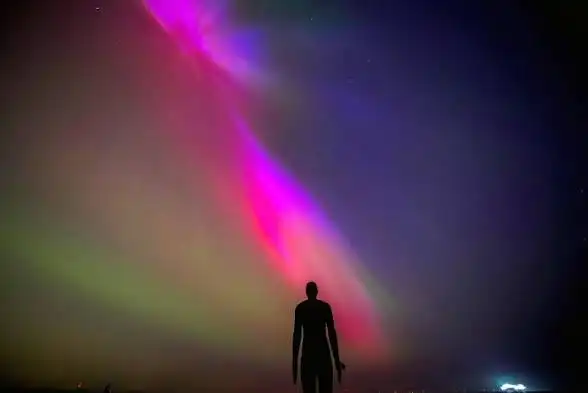
Recent solar activity has produced unusually strong auroras visible across higher latitude regions, a phenomenon linked to fluctuations in the solar wind impacting Earth’s magnetic field. Scientists have observed heightened emissions from the sun that interact with the magnetosphere, resulting in spectacular displays of light in polar skies. The intensity and frequency of these auroral events have sparked interest among both researchers and the general public, highlighting the ongoing influence of solar dynamics on terrestrial phenomena.
Geomagnetic monitoring stations report that weakened solar winds have allowed charged particles to penetrate deeper into Earth’s magnetic field than usual. This has enhanced the visibility of auroras and led to temporary disruptions in certain sensitive electronic systems, including navigation and communication networks. Experts emphasize that while the effects are largely benign for the general population, they underscore the interconnectedness of space weather and modern technology infrastructure.
Astronomers are using these events to study the behavior of the sun and its impact on planetary environments. Instruments aboard satellites and ground based observatories track particle flows and magnetic field variations, helping to improve predictive models for solar storms and geomagnetic disturbances. The data collected during these periods of increased activity contribute to a better understanding of space weather, which is essential for mitigating risks to satellites, power grids, and aviation.
In addition to scientific study, communities in northern regions have embraced the phenomenon for cultural and recreational purposes. Tourists and photographers often travel to witness the vivid auroras, providing economic benefits to local areas during the winter season. Educational programs and public outreach initiatives have also increased awareness of the physical processes behind these natural light displays, fostering a broader appreciation for solar and atmospheric science.
Looking ahead, researchers continue to monitor solar conditions closely, as further fluctuations could result in more intense geomagnetic effects in the months ahead. Collaboration between space weather agencies, scientists, and infrastructure operators is critical for preparing for potential disruptions. The ongoing study of solar activity not only illuminates the beauty of natural auroras but also reinforces the importance of understanding our planet’s place within the dynamic environment of the solar system.











Leave a comment