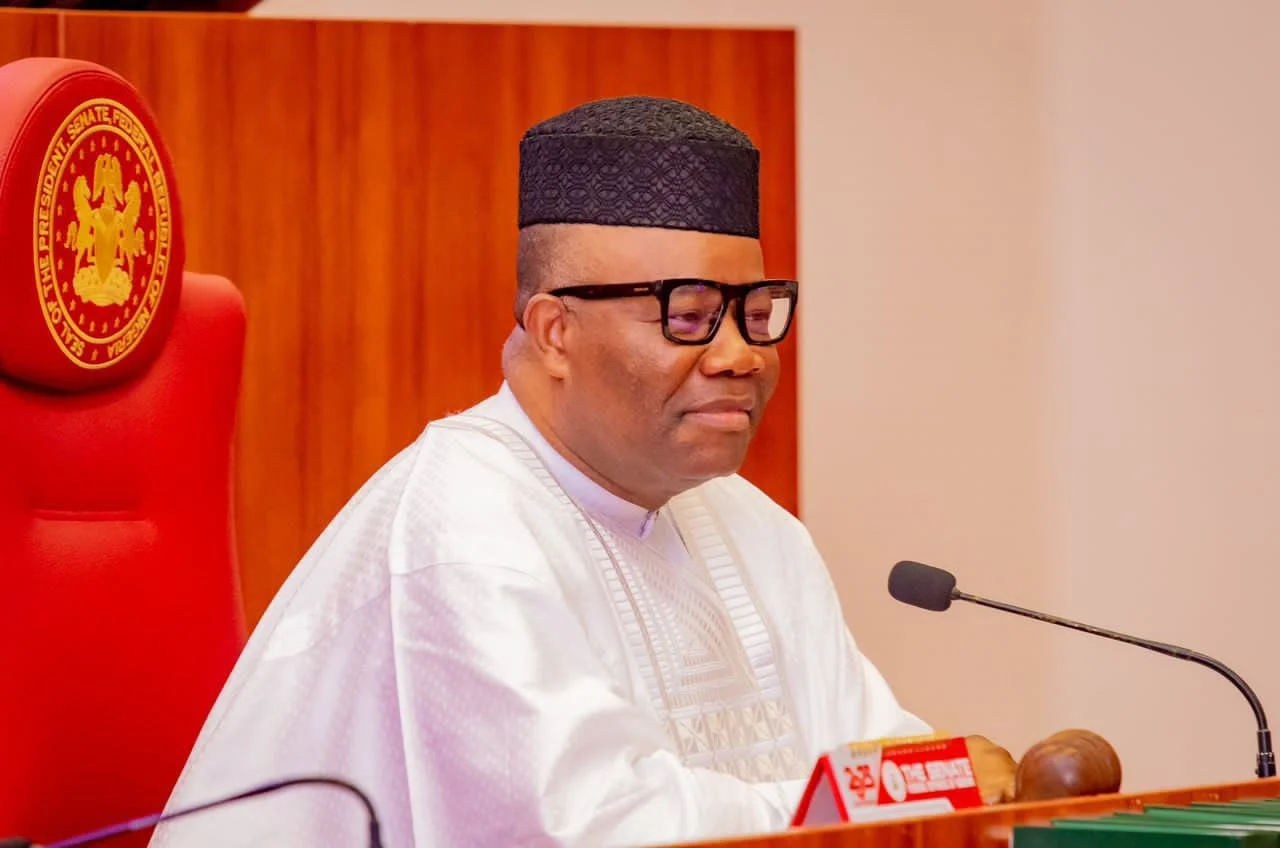
The Rule of Law and Accountability Advocacy Centre (RULAAC) has called on Senate President Rt. Hon. Godswill Akpabio to urgently transmit the Nigeria Police Force pension reform bill to President Bola Tinubu for assent, warning that continued delays could undermine justice, institutional confidence, and national security.
In an open letter dated February 12, 2026, and signed by Executive Director Okechukwu Nwanguma, RULAAC described the pending transmission — aimed at removing the Nigeria Police Force from the Contributory Pension Scheme — as a moral and national security imperative, not merely an administrative matter. The Senate passed the bill on December 4, 2025, but it has yet to be sent for presidential assent.
RULAAC highlighted the longstanding inadequacy of police welfare, noting that many retired officers live in poverty despite decades of service. The group warned that poor welfare structures fuel corruption, erode morale, and weaken public trust in law enforcement institutions. Nwanguma stressed that pension reform is a strategic necessity, enhancing professionalism, accountability, and operational effectiveness within the force.
Citing concerns from the Police Retired Officers Forum, RULAAC emphasised that the current system fails to account for the unique risks of police service, leaving retirees dependent on irregular and insufficient payments. The group warned that further delay, whether procedural or political, could create suion and erode confidence in the legislative process.
RULAAC also linked police welfare to broader national security, including the fight against insurgency, banditry, and communal violence, asserting that a demoralised force struggles to protect citizens and uphold democratic ility. The organisation urged the Senate to act promptly, describing protesting retirees as “veterans of service” and stressing that timely assent would signal commitment to justice, institutional strengthening, and national ility.












Leave a comment