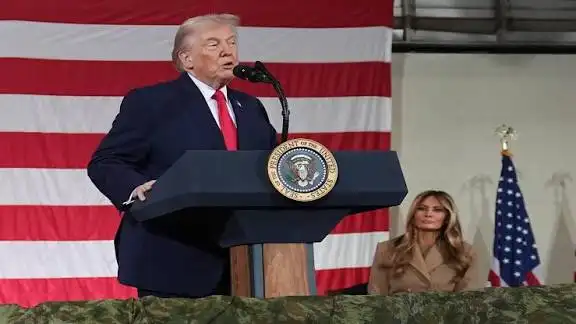
President Donald Trump has ordered a temporary ten percent global tariff on imported goods, moving swiftly to reassert trade leverage just days after the United States Supreme Court struck down his previous sweeping tariff framework. The new directive, announced from the White House, is designed to replace the broader measures invalidated by the Court and to maintain pressure on trading partners during ongoing negotiations.
According to administration officials, the revised tariff will apply uniformly across a wide range of imports while legal teams refine a narrower statutory justification. The White House argues that the temporary measure falls within clearly defined trade authorities and is structured to withstand judicial scrutiny. Officials described the action as calibrated and time limited, emphasizing that it is not intended to permanently restructure trade flows.
The Supreme Court ruling had concluded that the earlier tariffs exceeded the executive branch’s emergency authority. That decision prompted uncertainty in financial markets and concern among domestic industries that had relied on protective duties. In response, the administration framed the new ten percent tariff as a ilizing measure that preserves negotiating leverage without invoking the same expansive emergency rationale rejected by the Court.
Business groups offered mixed reactions. Some manufacturing associations expressed support, arguing that predictable baseline tariffs could provide short term certainty. Retail and consumer advocacy organizations warned that even a uniform ten percent duty may translate into higher prices for households already facing economic pressure. Economists noted that the overall impact will depend on the duration of the measure and the scope of goods covered.
Congressional leaders signaled they will closely review the administration’s approach. Several lawmakers from both parties have called for clearer statutory guidelines governing presidential trade authority. Others argued that maintaining flexibility is essential in responding to what they describe as unfair trade practices abroad.
International partners reacted cautiously, with some governments indicating they are evaluating whether the new tariff complies with existing trade agreements. Diplomatic channels remain active as officials seek to prevent further escalation.
The White House maintains that the temporary tariff strengthens the United States position in ongoing talks and demonstrates resolve following the judicial setback. Whether the revised policy will face additional legal challenges remains uncertain. For now, the administration’s rapid response underscores the central role of trade policy in its broader economic strategy and signals that tariff measures will continue to shape the global commercial landscape in the months ahead.








Leave a comment