The internal crisis within the Peoples Democratic Party has intensified following a recent court ruling that nullified the party’s controversial 2025 national convention, raising fresh questions about the future of the opposition party ahead of the 2027 elections.
The Court of Appeal of Nigeria upheld an earlier decision of the Federal High Court which invalidated the November 2025 convention held in Ibadan. The convention had produced Kabiru Tanimu Turaki as the party’s national chairman.
According to the appellate court, the convention violated provisions of the party’s constitution, the 1999 Constitution and the Electoral Act 2022. The judges noted that the required 21 day notice to the Independent National Electoral Commission was not properly issued and that proper state congresses were not conducted in several states.
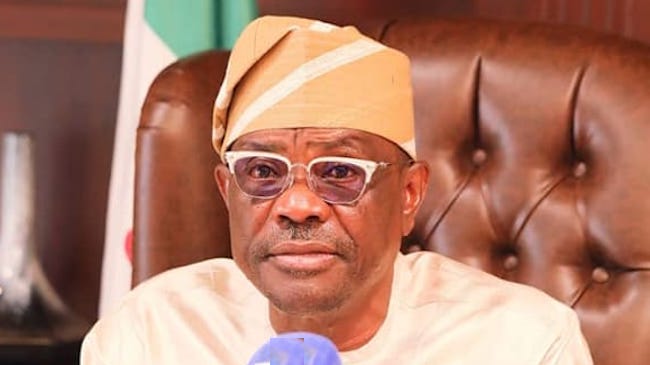
Politically, however, the ruling has strengthened the leadership structure aligned with Nyesom Wike, the Minister of the Federal Capital Territory, whose influence within the party continues to spark debate.
The crisis has revived comments previously made by Seyi Makinde, who claimed that during a meeting with Bola Ahmed Tinubu, Wike openly stated he intended to “hold the PDP down” ahead of the 2027 presidential election.
While some party members initially dismissed the remark as political rhetoric, recent developments including leadership disputes, defections and court battles have led many observers to reconsider the statement as a possible reflection of a broader political strategy.
Within the party, two major interpretations have emerged. Some members believe the PDP is collapsing due to its own long standing internal divisions. Others argue that the influence of powerful figures within the party, particularly Wike, has worsened the crisis and weakened its ability to function as a strong opposition platform.
Supporters of Turaki have called for reconciliation within the party but insist that any agreement must preserve the PDP’s independence as a credible opposition to the ruling All Progressives Congress.
Ini Ememobong, a spokesman for the Turaki aligned faction of the party’s National Working Committee, said reconciliation must focus on strengthening the party rather than turning it into what he described as an appendage of the ruling party.
Despite the accusations directed at him, Wike has publicly called for unity within the PDP following the court ruling. He described the judgment as a victory for the rule of law and urged party members to end prolonged legal disputes.
However, he also indicated that his faction now holds a stronger position within the party, suggesting that any reconciliation efforts must acknowledge what he described as the new balance of power.
Meanwhile, analysts warn that time may become the biggest challenge for the PDP. Even if the case eventually reaches the Supreme Court of Nigeria, the legal process could take months while the political calendar for the 2027 elections continues to move forward.
The party’s national strength has already declined significantly in recent years. Currently, the PDP controls only two state governorships, Oyo and Bauchi, both held by governors who will complete their second terms before the next presidential election.
Political analysts say that without a broader network of governors and political structures across the country, the party may struggle to mobilise resources and rebuild momentum before the next general election.
For many grassroots supporters, the crisis is already visible. Campaign activities have slowed in several areas, and enthusiasm among loyal party members appears to be fading.
As the 2027 election approaches, the key question remains whether the PDP can resolve its internal conflicts quickly enough to remain a strong challenger in Nigeria’s political landscape.









Leave a comment