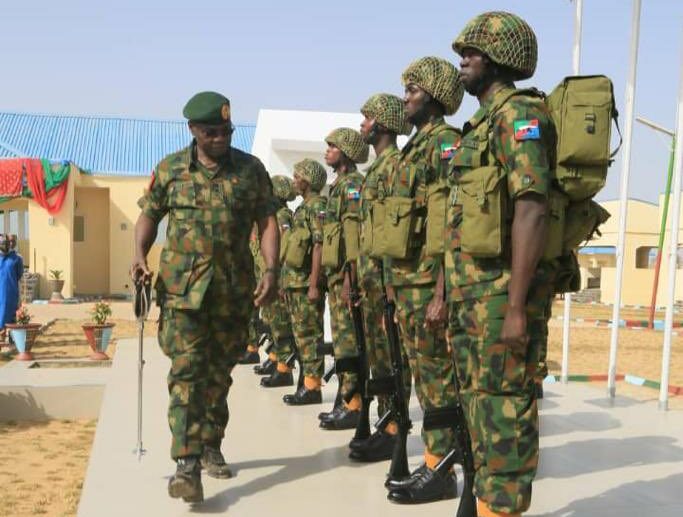
Nigeria is confronting what many observers now describe as a deepening erosion of state authority, as insecurity spreads across multiple regions and evolves from isolated insurgency into a broader national security challenge.
Recent developments across states such as Plateau State and Kwara State have intensified concerns over worsening violence involving terrorism, banditry, and organised criminal networks. Reports of the ing of a serving senior military officer have further underscored the growing vulnerability of security personnel on the front lines.
The Armed Forces of the Federal Republic of Nigeria, including the Nigerian Army, Nigerian Navy, and Nigerian Air Force, continue to operate under significant pressure as they respond to s across different theatres of conflict.
Analysts and security commentators argue that Nigeria’s current approach remains largely reactive, with security deployments often occurring after s have already taken place. They warn that gaps between intelligence gathering and operational response have weakened the effectiveness of counter insurgency efforts.
There are also growing concerns about coordination challenges among security agencies, including the military, the police, and intelligence services, which are not always fully integrated into a unified command structure capable of responding rapidly to emerging threats.
In several parts of the country, particularly in the North, insecurity has expanded beyond its original epicentre in the North East to the North West and North Central regions, raising fears of further territorial spread and the emergence of ungoverned spaces.
The situation has prompted renewed debate about whether Nigeria should declare a national security emergency to enable more coordinated and decisive action. Proposals have also been made for deeper integration of security operations using modern technology such as drone surveillance, satellite intelligence, and digital tracking systems.
Experts further stress the importance of strengthening community based intelligence systems to improve early warning capabilities, while ensuring citizens can safely and confidentially report suious activities to security agencies.
Attention has also been drawn to the welfare and operational capacity of security personnel, with calls for improved equipment, better logistics, and enhanced support for troops engaged in prolonged operations.
Stakeholders emphasise that addressing the crisis requires a multi level response involving federal, state, and local authorities, as well as traditional institutions and communities, in order to rebuild trust and strengthen grassroots security networks.
As insecurity continues to claim lives and displace communities, concerns are growing that Nigeria may be approaching a critical turning point in its internal security architecture.
The central message from analysts is clear: without urgent and coordinated reform, the current trajectory of insecurity could further undermine national ility and governance.








Leave a comment