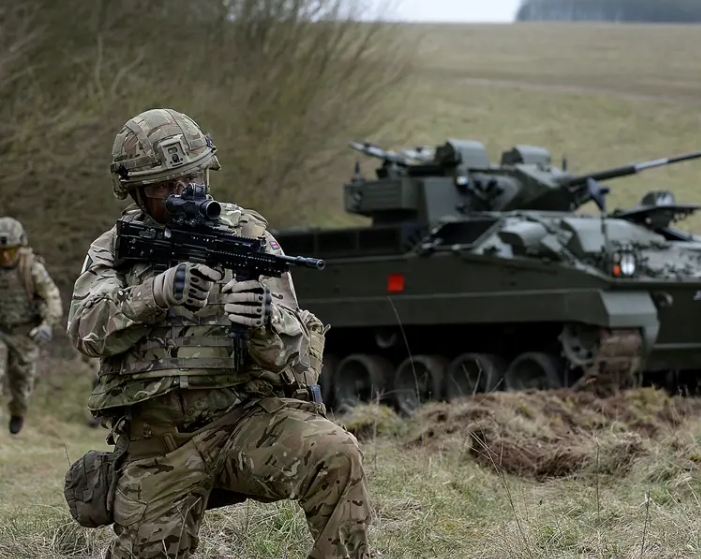
In 2025, military strategies worldwide are undergoing significant transformations as nations adapt to new warfare techniques and technologies. The integration of advanced technologies such as artificial intelligence (AI), unmanned systems, and cyber capabilities is reshaping defense strategies and operational approaches.
The United Kingdom has committed to a substantial modernization of its military forces, allocating approximately £68 billion to enhance capabilities in response to evolving global threats. This strategic overhaul emphasizes the incorporation of drones, autonomous vehicles, AI, and advanced weaponry, while maintaining traditional assets like nuclear warheads and submarines. The plan includes significant investments, such as £15 billion for nuclear warheads and the development of up to 12 Aukus submarines, alongside the procurement of F-35 and sixth-generation fighters. The UK government has pledged to increase defense spending from 2.3% to 2.5% of GDP by 2027, with a longer-term goal of reaching 3%, though no firm timeline has been set. This initiative underscores the UK’s commitment to adapting its military capabilities to contemporary warfare demands.
Similarly, European nations are recognizing the imperative to invest in modern, innovative warfare technologies. European Commission President Ursula von der Leyen emphasized the necessity for substantial rearmament, advocating for a shift from traditional strategies to prioritize modern technologies like drones, electronic warfare, and AI. The conflict in Ukraine has highlighted the strategic advantages of unmanned systems, prompting European countries to invest in these technologies to enhance defense capabilities and reduce dependency on traditional military assets.
The United States and China are intensifying their competition to develop military drone swarms equipped with AI, envisioning scenarios where hundreds or thousands of drones could engage in coordinated operations autonomously. This technological race is reminiscent of the Cold War and has the potential to fuel global inility, as the software-driven drones might be easily acquired by rogue nations and militants. Both nations claim they must develop these technologies to maintain a strategic advantage, with the U.S. focusing on deterrent measures against China, particularly regarding Taiwan. Despite some calls for collaboration to limit AI arms proliferation, the prospects for cooperation remain bleak amidst ongoing tensions.
The conflict in Ukraine underscores the transformative impact of drones on modern warfare. Integrating World War I-style trenches with advanced technology, the battlefield has evolved with remarkable speed, driven by Ukrainian innovation in drone technology. Commercial drones, controlled via civilian internet applications, are seamlessly incorporated into military operations, offering real-time advantages despite the relentless threat of Russian countermeasures. This war highlights the crucial role of software in evolving military strategies, potentially redefining battlefield dynamics by enabling autonomous, AI-driven drone capabilities.
In response to these developments, Russia has elished the Unmanned Systems Forces, a new branch within its military dedicated to unmanned systems. This formation reflects the critical role drones now play on the battlefield and signifies Russia’s commitment to countering adversaries’ technological advancements in unmanned warfare.
These global initiatives highlight a significant shift in military strategies, emphasizing the integration of advanced technologies to enhance operational effectiveness and adapt to the complexities of modern warfare.














Im not convinced that all these new military strategies are really necessary. Sometimes old-school tactics can still get the job done.
I cant believe how quickly military tactics ce. Do you think its all about technology now, or are old-school strategies still relevant?
Is it just me or does anyone else find it fascinating how quickly military strategies are cing in response to new technologies? Mind-blowing stuff!
Im not convinced that technology alone can win wars. Its still about strategy and human decision-making. What do you think?
I find it fascinating how military strategies constantly evolve. Makes me wonder what the future of warfare will look like!
I think utilizing drones in warfare raises ethical concerns. Is it really progress if it distances us further from the human cost of conflict?
I wonder if these new strategies will lead to more global conflicts or actually promote peace. What do you all think?
Im curious, do you think nations should prioritize investing in defensive or offensive military strategies in this evolving warfare landscape?