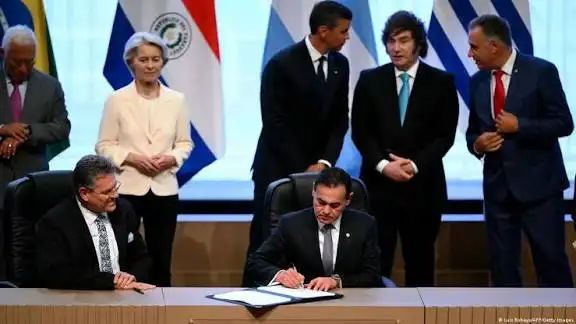
Trade patterns across Latin America are beginning to shift as the provisional application of the agreement between the European Union and Mercosur enters into force. Exporters and importers across the region are adjusting supply chains to reflect new tariff structures and expanded market access.
The agreement is expected to reduce duties on a broad range of goods, including agricultural commodities, automotive products, and industrial machinery. Businesses in Argentina and Uruguay, which have ratified the arrangement, are preparing to leverage improved access to European markets.
Regional trade experts say the pact may enhance competitiveness for Latin American exporters seeking diversification beyond traditional partners. Lower tariffs could make agricultural products more attractive to European buyers, while European manufacturers may gain greater penetration into South American consumer markets.
However, adjustments will not be uniform across sectors. Some domestic producers have expressed concern about increased competition from European imports. Policymakers are monitoring sensitive industries to assess potential impacts on employment and local supply chains.
Logistics firms report early signs of route recalibration, with shipping volumes expected to gradually reflect new commercial incentives. Financial institutions are also evaluating opportunities tied to expanded cross regional investment.
Economic analysts emphasize that the broader geopolitical environment may influence how rapidly trade volumes expand. Heightened global uncertainty can affect commodity prices and currency ility, which in turn shape export competitiveness.
Governments in the region have underscored their commitment to ensuring that environmental and labor standards are maintained as trade intensifies. Monitoring mechanisms embedded within the agreement are expected to play a role in oversight.
While full ratification processes continue within European institutions, the provisional phase provides an early indicator of how the pact may reshape transatlantic commerce in the years ahead.











Leave a comment