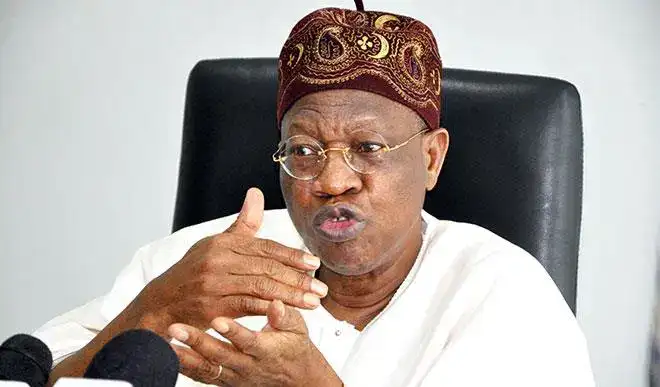
Former Minister of Information and Culture, Lai Mohammed, has attributed the escalation of the EndSARS protests crisis to the spread of fake news and disinformation rather than shortcomings in government communication.
Speaking at a forum at the London School of Economics and Political Science, Mohammed acknowledged that the protests began as a legitimate movement against police brutality but later spiraled due to the circulation of misleading and unverified information across both traditional and digital media platforms.
He pointed to the deployment of troops at the Lekki Toll Gate as a critical turning point, after which misinformation surged significantly. According to him, the government faced not just a communication challenge but a broader issue involving the dangerous combination of false narratives and rising unrest.
Mohammed also criticized international media coverage, particularly singling out CNN, for allegedly relying on unverified and sometimes manipulated materials that influenced global perceptions of the incident.
Reflecting on the COVID-19 pandemic, he said Nigeria adopted a transparent and multi platform communication strategy, including daily briefings and multilingual messaging. He credited this approach with reducing public anxiety and improving compliance with health guidelines.
On security, Mohammed referenced efforts against Boko Haram, noting that a media tour of formerly occupied areas helped counter narratives that insurgents still held significant territory. He emphasized that effective information management is essential in weakening extremist influence.
He also defended the government’s suspension of Twitter in Nigeria, describing it as a response to concerns over misinformation and harmful content.
The event marked the end of his UK speaking tour, where he discussed governance and media practice, drawing from his book Headlines and Soundbites: Media Moments That Defined an Administration, which chronicles his time in office from 2015 to 2023.




Leave a comment