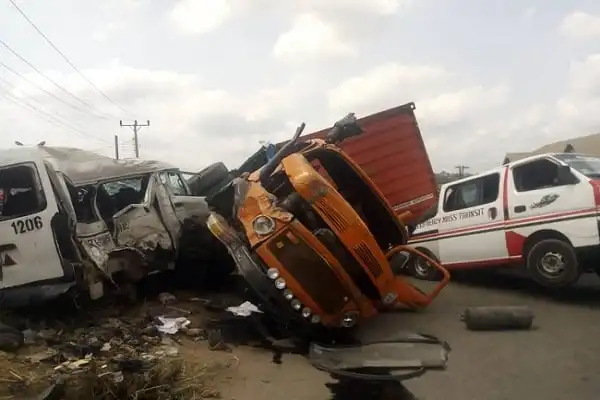
Lagos State is witnessing a worrying increase in road accidents, with substance abuse among commercial vehicle drivers identified as a major contributor. Recent statistics highlight a surge in crashes and fatalities, raising questions about the effectiveness of current traffic management and road safety measures.
According to the Federal Road Safety Corps, nationwide road accidents rose by 9.2 per cent in 2025, with Lagos specific fatalities reaching 91 between January and November. High risk areas include the Otedola and Kara bridges, while festive periods see spikes in crashes. Speeding, reckless driving linked to alcohol and drug use, dangerous overtaking, and poorly maintained vehicles account for the bulk of incidents.
The World Health Organisation reports Nigeria has 21.4 road deaths per 100,000 people, ranking the country among the highest in Africa. Justice Monica Dongban-Mensem of Kwapda’s Road Safety Demand highlighted the alarming figures and called for urgent interventions.
Lagos State Government, under Governor Babajide Sanwo-Olu, has launched health and safety initiatives for commercial drivers. Senior Special Assistant on Transport and Logistics, Comrade Hassan Adekoya, explained that over 10,000 drivers received free eye screenings, medical consultations, corrective lenses, and substance abuse awareness across four locations including Apapa, Iyana Iba, Obalende, and Lekki Free Trade Zone Parks. Several drivers identified with substance addiction were referred to rehabilitation by the National Drug Law Enforcement Agency.
The Lagos State Traffic Management Authority (LASTMA) has also raised alarms over speed-related crashes. Olalekan Bakare Oki, General Manager of LASTMA, cited incidents where overspeeding combined with mechanical failures caused severe injuries. Residents have reported accidents on key corridors such as Lagos Badagry Expressway and Third Mainland Bridge, attributing crashes to reckless commercial drivers, poor road conditions, and faulty traffic signals.
In response, the FRSC has introduced stricter measures for 2026, including intelligence-led enforcement on high risk routes, zero tolerance for the “Big Five” offences speeding, dangerous driving, drunk driving, wrong-way driving, and overloading and mandatory use of speed limiters in commercial vehicles.
Experts and stakeholders emphasize that addressing road carnage requires collaboration among government agencies, drivers, vehicle owners, and road users. Behavioral ce, improved driver training, and stricter enforcement are key to reducing accidents.










Leave a comment