At 6 a.m. along the Lekki, Ajah corridor, a CMS T&M Nigeria Limited bus, part of Lagos State’s mass transit scheme, crawls toward CMS, packed with passengers. Some sit cautiously on torn seats, others stand tightly packed, yet commuters squeeze in because survival outweighs comfort.
For Lagos’ estimated 26.4 million residents, public transport spans Danfos, BRT buses, CMS T&M fleets, LBSL buses, TATA Starbus, minibuses, ferries, and private shuttles. But beneath the variety lies a systemic challenge: manual fare collection, fragmented operations, and weak accountability.
Digital progress and commuter benefits
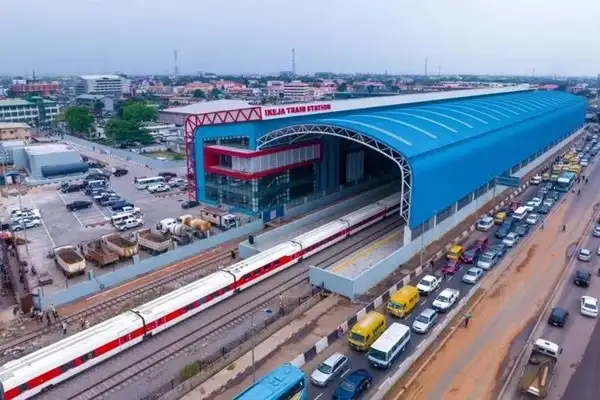
Lagos has made strides through the Cowry Tap and Pay system, enabling cashless payments on BRT buses, Lagos Rail Mass Transit, and select ferries. For commuters like Oluwaseun Adebayo and Kunle Adeyemi, this has transformed daily travel: boarding is orderly, fares are fixed, and journeys feel predictable.
Digital fare collection provides verifiable data, allows revenue audits, facilitates maintenance scheduling, and supports regulatory oversight. It operationalizes Digital Public Infrastructure principles: interoperability, open standards, public accountability, and user-centric design.
Persistent gaps in the system
Outside BRT, rail, and select ferries, most buses and minibuses continue to rely on cash payments. Manual fare collection undermines accountability, reduces fleet maintenance, and limits expansion. Analysts warn that cash dependent systems enable revenue leakages and compromise service quality.
Poorly maintained vehicles also contribute to environmental and public health challenges. Lagos State’s Ministry of Environment and Water Resources reports high PM2.5 and PM10 levels from ageing buses, exposing commuters to respiratory and cardiovascular risks.
Lessons from global cities
Cities like Milan and Gothenburg integrate buses, trains, trams, bicycles, and scooters under interoperable digital payment systems. Data is shared publicly, services are regulated as digital public goods, and commuters enjoy seamless, reliable transport. Lagos’ hybrid model, partly digital, largely analogue, falls short of these standards.
Government response and incremental reform
The Lagos State Ministry of Transportation’s Bus Reform Initiative (BRI) aims to formalize operations along corridors like Lekki, Epe. Through franchising, private operators can adopt digital payments, procure regulated buses, and follow structured routes. Plans to extend Cowry Tap and Pay to additional operators, transition fleets to compressed natural gas and electric vehicles, and integrate rail and ferry services are underway.
Experts from Treepz and Technation Logistics stress that technology alone cannot fix systemic issues. Structured routes, disciplined fleet management, and proper maintenance are essential for large-scale digital adoption. Stepwise integration of organised fleets is feasible, while manual cash operations continue to undermine transparency and efficiency.
The human and environmental cost
Fragmented transport results in lost time, stress, higher fares, and reduced productivity for commuters. For government, revenue leakages and poor maintenance persist. For the city, emissions and health risks rise. Experts urge Lagos to transform isolated digital tools into true Digital Public Infrastructure, interoperable, accountable, and designed around commuters’ daily needs.










Leave a comment