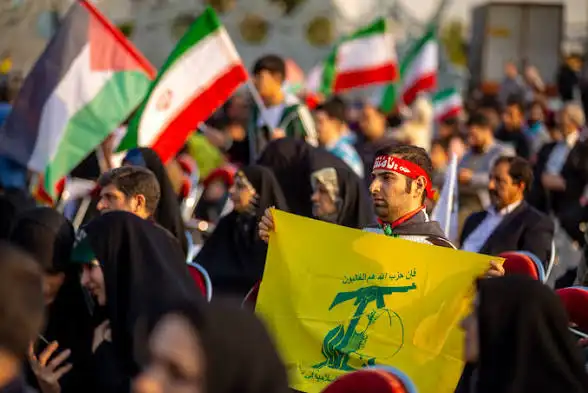
Iranian aligned proxy groups are increasing their involvement in the ongoing regional confrontation, signaling a broader operational footprint that is reshaping the dynamics of the conflict. These groups, operating across multiple territories, are contributing to a more complex security environment as coordination appears to deepen alongside rising tensions between major state actors in the Middle East.
Security analysts report that groups such as those linked to movements in Yemen and parts of Iraq have intensified their activities, demonstrating both strategic alignment and operational flexibility. Their actions are seen as an extension of Iran’s regional influence, allowing engagement across several fronts without direct attribution, a tactic that continues to complicate response strategies for opposing forces.
The expanding role of these groups has raised concerns among neighboring countries, many of which fear that localized engagements could evolve into broader confrontations. Governments in the region are closely monitoring developments, strengthening defensive measures, and increasing intelligence sharing to better anticipate potential threats emerging from this shifting landscape of non state actors.
Military experts highlight that proxy involvement introduces additional unpredictability, as decentralized command structures and varied objectives can influence the pace and direction of developments on the ground. This environment can make it more difficult to elish clear lines of communication or de escalation, thereby increasing the risk of unintended escalation across multiple theaters simultaneously.
International observers have called for renewed diplomatic efforts to address the underlying factors contributing to the growing role of proxy forces. There is a recognition that without addressing broader geopolitical rivalries, these groups are likely to remain active participants, further entrenching the complexity of the situation and prolonging uncertainty across affected regions.
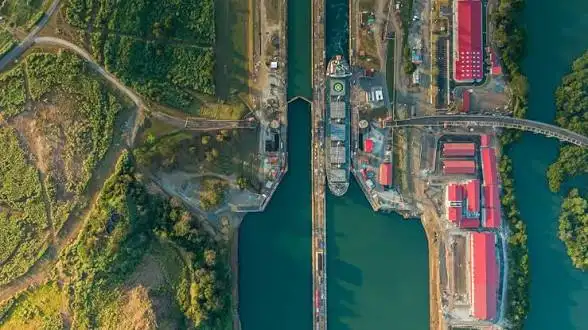
Economic implications are also emerging, particularly in areas where infrastructure and trade routes intersect with zones of heightened activity. Disruptions linked to proxy operations can affect supply chains and investor confidence, adding another layer of pressure to economies already navigating volatility associated with the broader conflict and global market reactions.
As the situation continues to evolve, the increasing involvement of Iranian aligned groups underscores the multi dimensional nature of the confrontation. Analysts emphasize that understanding the role of these actors will be essential for shaping effective policy responses, as regional and international stakeholders seek to manage risks and prevent further escalation in an already tense environment.







Leave a comment