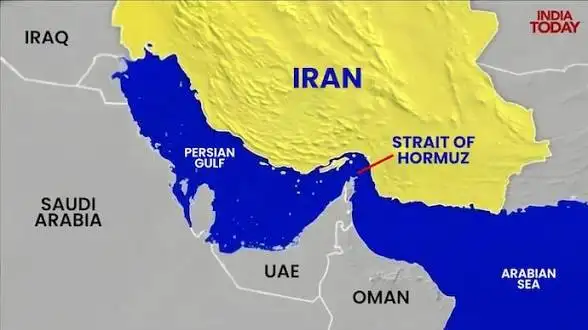
Iranian officials have issued strong warnings that the country may consider closing the Strait of Hormuz if the ongoing regional confrontation continues to intensify. The statement has drawn immediate international attention because the narrow maritime corridor represents one of the most critical routes for global energy transportation. Any restriction or closure could disrupt the movement of vast quantities of oil and natural gas from Gulf producers to international markets, potentially triggering a significant economic shock.
Government representatives in Tehran said that Iran retains the ability to take decisive measures to defend its national interests and respond to what it describes as external pressure from Western powers and their regional partners. The warning comes during a period of heightened military activity across the Middle East, where tensions involving Iran, Israel, and the United States have created a rapidly evolving security environment. Officials emphasized that the country views the strategic waterway as an important leverage point in the broader geopolitical confrontation.
The Strait of Hormuz serves as a narrow maritime gateway linking the Persian Gulf with the wider global shipping network. Each day large numbers of oil tankers and cargo vessels move through the passage carrying energy supplies from countries including Saudi Arabia, the United Arab Emirates, Iraq, and Kuwait. Because of its geographic position, even limited disruptions to shipping activity in the strait can produce immediate consequences for international markets and supply chains.
Energy analysts and maritime security experts have expressed concern that any attempt to block the route could escalate the regional crisis and lead to a broader international response. Several countries maintain naval forces in nearby waters specifically to ensure the continued flow of commercial shipping. Governments that rely heavily on Gulf energy exports are closely monitoring the situation while evaluating potential contingency plans that could include alternative shipping routes and increased naval patrols.
Diplomatic efforts are also intensifying as world leaders seek to prevent further deterioration in the security environment. Many governments have urged restraint and called for renewed dialogue to reduce tensions surrounding the strategic waterway. For global energy markets the possibility of restrictions in the Strait of Hormuz represents one of the most serious risks currently facing international trade. As the regional conflict continues to evolve, the future of this vital shipping corridor remains a central concern for policymakers and industry leaders around the world.












Leave a comment