
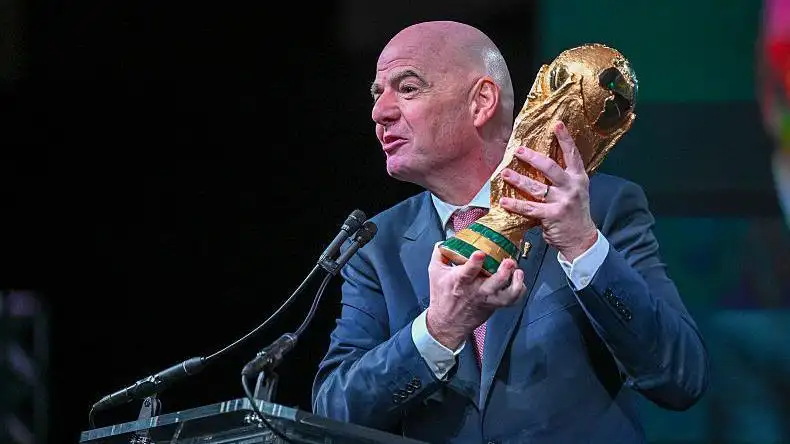
FIFA president Gianni Infantino is moving forward with plans to potentially implement hydration breaks at all future World Cups, even as the controversial stoppages drew criticism from fans and pundits during this year’s tournament. The decision signals a shift in how football’s governing body balances player welfare against traditional concerns about game flow and spectator experience.
Hydration breaks, which typically occur midway through each half during matches played in extreme heat, have become a divisive issue in international football. Critics argue the interruptions disrupt the rhythm and intensity that make the sport compelling to watch. Players lose momentum. Tactical advantages get neutralized. Yet supporters of the policy point to mounting evidence about the dangers of heat stress and dehydration on athletic performance and long term health outcomes.
FIFA first introduced mandatory cooling breaks during the 2014 World Cup in Brazil, where temperatures and humidity levels in several host cities created potentially hazardous conditions for players. Since then, the practice has been adopted selectively based on weather conditions and tournament locations. However, Infantino’s consideration of making these breaks standard procedure represents a significant expansion of the policy, one that would apply regardless of climate or host nation.

Medical experts have increasingly voiced support for structured hydration protocols in professional sports. Dehydration can impair cognitive function, reduce physical performance, and increase injury risk among elite athletes. Football players, who often cover more than 10 kilometers during a single match, face particular challenges when competing in hot and humid environments. Stus have shown that even mild dehydration can negatively impact decision making and technical ss on the pitch.
Nevertheless, broadcasters and sponsors have expressed concerns about the commercial implications of additional stoppages. Television networks worry about viewer retention during breaks in play. Sponsors question whether extended interruptions dilute the product they have invested billions to support. Meanwhile, traditionalists within the football community argue that the sport has managed extreme conditions for over a century without mandatory hydration breaks, suggesting that modern sports science can address these issues through improved training and preparation.
As FIFA moves toward a final decision on this policy, the debate will likely intensify ahead of future tournament planning cycles. Infantino’s willingness to push forward despite the backlash suggests player welfare concerns are winning out over entertainment considerations, at least at the highest levels of football governance. How this plays out in practice, and whether other major competitions follow suit, will shape the viewing experience for billions of football fans in the years ahead.






Leave a comment