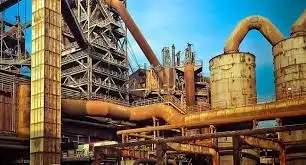
The Federal Government has earmarked N6.04 billion for personnel costs at the Ajaokuta Steel Company Limited (ASCL) in the 2026 budget, despite the steel complex remaining non-operational for over four decades.
According to the 2026 Appropriation Bill, ASCL’s total allocation stands at N6.69 billion, with salaries and wages accounting for N4.79 billion, while allowances, pensions, and social contributions take up another N1.25 billion. Overhead costs are limited to N233.63 million, and capital expenditure totals just N410.8 million, highlighting minimal resources devoted to reviving steel production.
The capital budget includes N56.4 million for fixed assets, N129.2 million for facility construction, and N225.2 million for rehabilitation works, mainly on electricity and office infrastructure. Analysts note that these amounts fall far short of what is required to operationalise the heavy industrial complex, originally conceived in 1979 to drive Nigeria’s steel and manufacturing value chain.
While ASCL continues to function primarily as a payroll institution, the 2026 budget also provides funds for revitalisation efforts under the Ministry of Steel Development. Specifically, N150.99 million is allocated for ongoing revitalisation of ASCL and the National Iron Ore Mining Company, with an additional N1.06 billion for project preparation, including feasibility stus, financial modelling, and environmental assessments.
Previous revival attempts, including agreements with Russian and Chinese partners, have failed to yield results. The government estimates that fully reviving the plant could cost between $2 billion and $5 billion, with experts suggesting that privatisation may be the most viable option to unlock its industrial potential.
Despite remaining inactive, ASCL employs about 3,000 staff and continues to receive budgetary support, underscoring its status as one of Nigeria’s most persistent non-performing public enterprises.













Why are we still allocating funds to a dormant steel company? Shouldnt that money be used elsewhere for active projects?
Why waste money on a dormant steel company? Shouldnt funds be allocated to more productive sectors? Lets discuss.
Why waste money on a dormant steel company when there are pressing needs in other sectors? Priorities, people!
Why are we still allocating funds to a dormant company? Shouldnt we invest in more viable projects instead? Seems like a waste.
Why is the government still allocating funds to a dormant project like Ajaokuta Steel Company? Shouldnt those funds be redirected to more productive ventures?
Why waste money on a dormant steel company? Shouldnt we be investing in more productive ventures? Just my two cents.