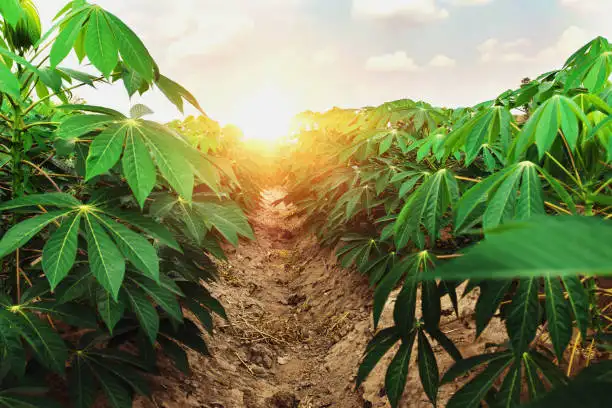
The Federal Government has launched an ambitious initiative aimed at empowering 14 million smallholder farmers as pivotal players in the Cassava Bio-Ethanol Value Chain Development Project. The project seeks to reduce Nigeria’s fuel import costs while strengthening the nation’s bio-economy.
In a statement released by the Ministry of Budget and Economic Planning, Minister Senator Abubakar Atiku Bagudu emphasized the significance of the project during a two-day capacity-building workshop for stakeholders in the South East zone, which was held last week in Enugu.
Represented by the Director of Economic Growth, Mr. Auwal Mohammed, Bagudu explained that the project’s core objective is to integrate smallholder farmers into industrial production. The initiative will connect agriculture to energy transition, rural development, and local value addition. By blending bio-ethanol with Premium Motor Spirit (PMS), the project is projected to save Nigeria over N3 trillion annually in foreign exce, reducing the country’s reliance on imported fuel.
“We are looking at the entire value chain, from high-quality cassava stems and starch to CO2 captured during fermentation and the distillery grains used for animal feed,” Bagudu said. This holistic approach will position cassava as a strategic industrial crop, fostering job creation, boosting rural incomes, and enhancing the local production capacity within the renewable energy sector.
The project will be carried out through a Triple-Helix knowledge transfer partnership, focusing on introducing high-yield, disease-resistant cassava varieties. It will also attract investment, expand access to technology and markets, and improve the enabling environment and infrastructure to support the initiative.
Mr. Olaifa Alade, Director of Agriculture in the Economic Growth Department, added that the workshop was designed to prepare stakeholders for the effective implementation of the project, which is poised to make a significant impact on Nigeria’s agriculture and energy sectors.










Im all for supporting farmers, but is bio-ethanol really the way to go? What about sustainable farming practices instead?
Im not convinced this project will benefit all farmers equally. Some might be left out. What do you think?
This sounds promising, but will it really benefit small-scale farmers or just big corporations? Lets stay skeptical.
Do we really need more bio-ethanol projects? Shouldnt the focus be on sustainable farming practices instead? Just a thought.
This project sounds promising, but will the government prioritize sustainability and local communities over profit margins? Lets discuss!
Im not convinced this project is the best use of resources. Shouldnt we focus on more sustainable energy sources instead?