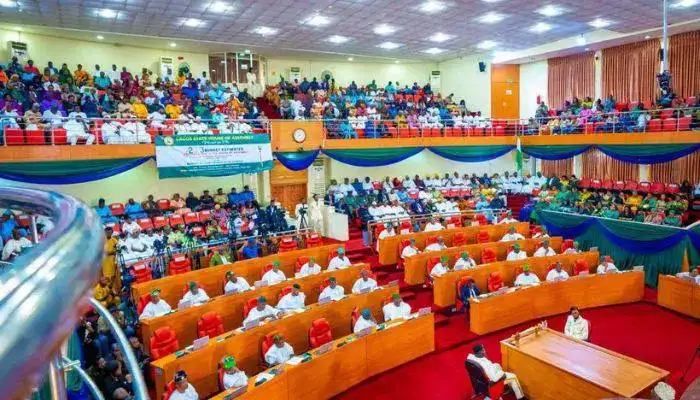
The wave of defections in Nigeria’s House of Representatives intensified on Wednesday as lawmakers from the New Nigeria Peoples Party and the Peoples Democratic Party switched allegiance to rival parties, signaling early political realignments ahead of the 2027 general elections.
During plenary presided over by Speaker Tajudeen Abbas, four lawmakers from Kano State formally announced their defection from the NNPP to the African Democratic Congress. The lawmakers cited persistent internal crises and leadership disputes within their former party as the primary reason for their exit.
Leading the group, Adamu Wakili, who represents Minjibir Ungogo Federal Constituency, said the decision was necessary to align with a more le and inclusive political platform. Other defectors include Umar Zakari, Umar Datti, and Abdulhakeem Ado, all of whom pointed to prolonged divisions within the NNPP at both state and national levels.
In separate developments, two lawmakers from the PDP also defected to the ruling All Progressives Congress. Ahmadu Kabiru of Zamfara State and Chinedu Martins of Imo State both confirmed their departure, with Martins noting that he had already aligned with the APC at the ward level earlier in March 2026.
The latest defections underscore growing inility within opposition parties and a broader reshaping of Nigeria’s political landscape as parties begin positioning for the next election cycle.
Despite the shifts, the APC maintains a dominant position in the House with 282 members. The PDP now holds 30 seats, while the ADC has increased its presence to 24 seats. Other parties, including the Labour Party, All Progressives Grand Alliance, Accord Party, Action Peoples Party, and Social Democratic Party, maintain smaller representations. The NNPP, once more prominent, has now been reduced to just one seat following the recent exits.
Political analysts say the trend may continue as lawmakers reassess their affiliations in the lead up to 2027.












Leave a comment