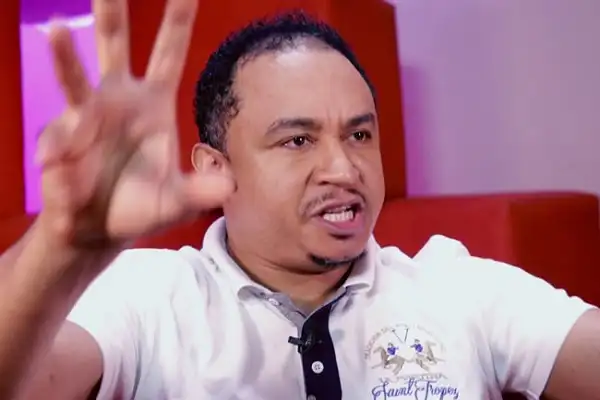
Popular media personality Daddy Freeze has ignited fresh public debate after suggesting that religion may be holding back Nigeria’s development.
Speaking on The Honest Bunch Podcast, the outspoken commentator questioned the relationship between Nigeria’s strong religious culture and its socio economic realities. He argued that despite widespread devotion, there has been little visible progress in key areas such as infrastructure, economic ility, and quality of life.
According to him, high levels of religious activity do not automatically translate into national prosperity. He compared Nigeria with Japan, noting that less religious societies often achieve stronger development outcomes and higher living standards.
“My problem with religion is it has no results. Where is the prosperity? Where is the love?” he said, questioning why a deeply religious nation continues to struggle with poverty and limited social progress.
Daddy Freeze also pointed to concerns about life expectancy and economic hardship, arguing that commonly cited signs of divine favour such as wealth and good health are not widely reflected in everyday realities for many Nigerians.
He further criticised financial priorities, claiming that many citizens contribute more to religious institutions than to public systems through taxes, without seeing corresponding improvements in national development.
His comments have triggered mixed reactions across the country. Supporters say he has raised valid concerns about misplaced priorities and accountability, while critics argue that his views oversimplify the complex relationship between faith, governance, and development.
As the conversation continues, his remarks have once again placed the role of religion in Nigeria’s public life under scrutiny, highlighting broader questions about how belief systems intersect with governance, policy, and national progress.






Leave a comment