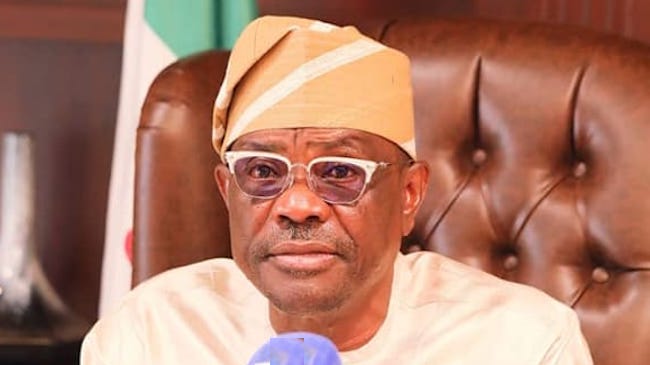
On paper, Nyesom Wike remains a member of the Peoples Democratic Party (PDP). In practice, Nigerian politics has long stopped obeying paper. Wike now occupies a far more complex political space, one that transcends party labels and constitutional timelines. He is PDP by registration, APC by alignment, and soing far more consequential by operation: a former governor whose power outlived office.
Wike did not simply leave Government House in Port Harcourt when his tenure ended. He carried it with him. Rivers State is not grappling with post-transition adjustment; it is contending with the prolonged authority of a man whose influence hardened after leaving office, embedding itself in political structures, loyalties and institutions meant to function independently of him.
Governor Siminalayi Fubara’s defection to the All Progressives Congress did not create the Rivers crisis; it merely exposed it. The move was not ideological realignment but a survival response within an already fractured power structure. By the time Fubara crossed party lines, authority had long been contested. The defection was not the beginning of conflict, but an admission that the battle had been ongoing beneath the surface.
Wike’s political machinery is not built on shared philosophy or party ideology, but on obence. His network consists largely of loyalists whose political careers were shaped, funded and protected within his orbit. This reality is most evident in the Rivers State House of Assembly, where allegiance has remained consistent regardless of shifting party labels. The Assembly’s posture toward Governor Fubara reflects inherited loyalty, not legislative independence.
This dynamic reinforces a dangerous precedent: that elections do not necessarily confer authority, and that political power in Nigeria can be retained indefinitely through loyal structures even after constitutional tenure expires. It weakens parties, hollows out institutions and turns governance into a contest between past power and present mandate.
Rivers State is more than a local drama. It is a national warning. It reveals what happens when loyalty to individuals replaces loyalty to institutions. Until Nigeria confronts this reality, party defections will continue to dominate headlines while the deeper crisis of domination remains unresolved.










I think Wikes influence without holding office is both impressive and concerning. What do you guys think? Should power be wielded outside official positions?
I think Wikes power play in Rivers State is both impressive and concerning. What do you all make of his tactics?
I believe Wikes unconventional approach to power in Rivers State is both intriguing and controversial. What do you think?
I think Wikes influence in Rivers State is undeniable, but does power without official title truly benefit the state or just him?
Isnt it crazy how power dynamics play out in Rivers State? Wikes influence without office is mind-boggling. Whats your take?
I disagree with the articles view on Wikes power. Hes a force to be reckoned with, regardless of holding office.