
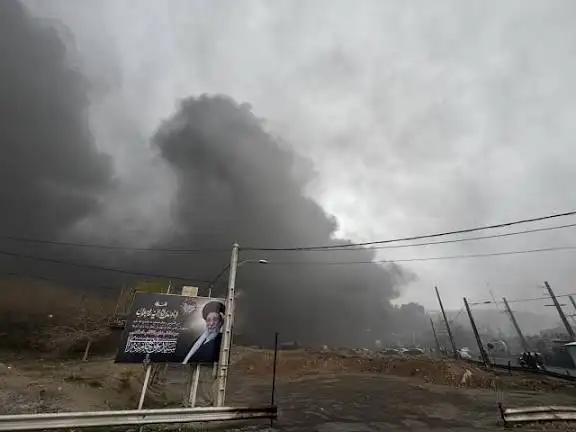
Israeli military operations inside Iran widened significantly as new waves of airstrikes targeted energy facilities and infrastructure around the Iranian capital of Tehran. Military officials in Israel stated that the strikes were designed to disrupt logistical networks and fuel reserves that support Iranian military capabilities. Reports from Iranian authorities confirmed that several storage areas and industrial facilities near the capital were struck during overnight operations, sending large plumes of smoke into the sky and prompting emergency crews to respond across multiple districts.
Residents in parts of Tehran reported hearing several loud blasts followed by power interruptions and visible fires at fuel storage locations. Iranian state media said emergency teams were deployed rapidly to contain fires and prevent further damage to surrounding infrastructure. Authorities urged citizens to remain calm while assessments of the affected facilities continued. While officials did not immediately release details about the full extent of the damage, analysts monitoring satellite imagery said several major energy storage locations appeared to have been impacted.
Israeli defense officials described the operation as part of a broader campaign aimed at limiting Iran’s ability to sustain military operations and project power across the region. According to statements from Israeli military sources, targeting energy infrastructure linked to logistical supply chains is intended to reduce the operational capacity of Iranian forces and affiliated groups. The strikes represent one of the most direct attempts so far to disrupt Iran’s domestic infrastructure during the expanding regional confrontation.
The widening scope of the campaign has raised concerns among international observers about the potential consequences for civilian infrastructure and regional energy markets. Iran remains one of the largest oil producers in the Middle East, and disruptions to storage and transport systems could have ripple effects beyond the immediate conflict zone. Energy analysts have warned that damage to fuel depots or distribution networks could affect domestic fuel supply while also complicating Iran’s ability to export energy products during an already volatile period in global markets.
Diplomatic reactions to the escalation have been swift, with several governments calling for restraint and renewed diplomatic engagement. International organizations have urged all parties involved to prioritize the protection of civilian areas and critical infrastructure. As military exces continue across the region, the strikes near Tehran highlight the growing scale of the confrontation and the increasing risks that the conflict could affect broader economic and security systems throughout the Middle East and beyond.








Leave a comment