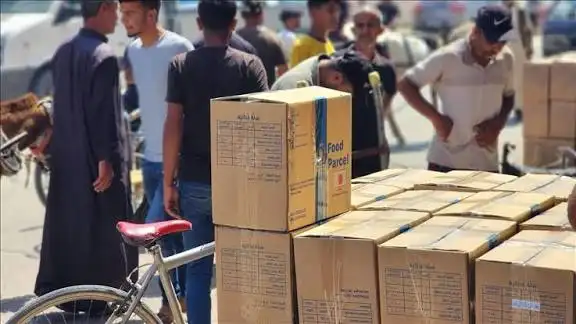
The World Food Programme has reported significant disruptions to its logistics network as airspace closures across parts of the Middle East impede the movement of humanitarian supplies. The agency said ongoing military activity and security restrictions have delayed shipments of food and essential relief items destined for vulnerable populations in several countries.
In a statement issued from its regional coordination office, the World Food Programme warned that the evolving conflict has complicated flight scheduling and cargo routing. Aircraft carrying emergency rations have been forced to reroute or await clearance, leading to backlogs at key logistics hubs. Ground transportation has also been affected in certain areas due to heightened security checks and temporary road restrictions.
Humanitarian officials emphasized that timely delivery is critical for communities already facing food insecurity. Many of the affected areas depend heavily on air transport to receive aid, particularly in remote or conflict impacted zones where land access is limited. Any prolonged interruption could exacerbate shortages and increase pressure on local resources.
The agency is working closely with aviation authorities and partner organizations to identify alternative corridors and ensure continuity of operations. Contingency planning includes the use of neighboring airports and expanded reliance on sea freight where feasible. However, officials acknowledged that maritime routes may not offer the same speed required for emergency relief.
Aid groups across the region have echoed concerns about the cumulative impact of inility on humanitarian access. Rising fuel costs linked to the broader crisis have further strained operational budgets, complicating efforts to scale up assistance. Donor governments are being urged to provide flexible funding to adapt to rapidly cing conditions.
The United Nations has repeatedly called for respect for humanitarian corridors and the protection of civilian infrastructure amid the conflict. Ensuring safe passage for relief operations remains a central priority in diplomatic discussions.
Analysts note that disruptions to aid delivery highlight the indirect consequences of geopolitical tensions. While military operations dominate headlines, their ripple effects often reach vulnerable populations far from front lines.
The World Food Programme reaffirmed its commitment to continuing assistance despite the challenges. Officials said teams on the ground remain operational and are coordinating with local partners to mitigate delays wherever possible. The agency stressed that maintaining humanitarian access will be essential in preventing further deterioration of already fragile situations across the region.













Leave a comment