
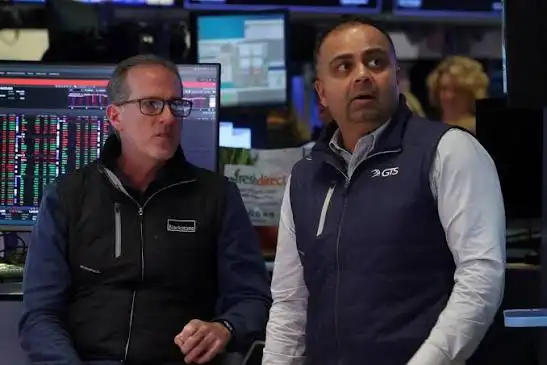
Financial markets reacted sharply to renewed uncertainty over United States tariff policy, with Wall Street futures and the US dollar declining as investors weighed conflicting signals from policymakers. Analysts cited confusion surrounding trade measures as a key driver of volatility across equities, currencies, and bonds.
Futures contracts tied to major US stock indices pointed lower in early trading, reflecting caution among market participants. Currency markets also saw the dollar weaken against several major counterparts, as traders reassessed expectations for economic growth and monetary policy.
The latest turbulence follows a series of announcements and legal developments affecting tariff measures. Businesses have struggled to interpret the potential impact on supply chains, pricing, and corporate earnings. Economists warn that inconsistent messaging can amplify market swings, particularly in periods of fragile confidence.
Investors sought refuge in traditional safe assets, including government bonds and precious metals, as uncertainty clouded the outlook. Market strategists noted that trade policy plays a significant role in shaping inflation trends and consumer sentiment, making clarity essential for ility.
Corporate leaders have called for predictable rules to guide investment decisions. Several industry groups expressed concern that abrupt ces could disrupt procurement strategies and increase costs for manufacturers and retailers.
Meanwhile, policymakers defended their approach, arguing that adjustments are necessary to safeguard domestic industries and address trade imbalances. Critics countered that prolonged ambiguity risks undermining economic momentum.
Global markets mirrored the cautious mood in New York, with Asian and European indices posting mixed performances. Currency traders pointed to the dollar’s retreat as evidence that investors are hedging against potential shifts in fiscal and trade strategy.
As markets digest the evolving situation, analysts expect continued sensitivity to official statements and court rulings related to tariffs. For now, volatility appears likely to persist until clearer guidance emerges on the direction of United States trade policy.










Leave a comment