
The United States has approved a massive $16.46 billion military sales package to the United Arab Emirates and Kuwait, as tensions continue to escalate across the Gulf following recent conflict involving Iran.
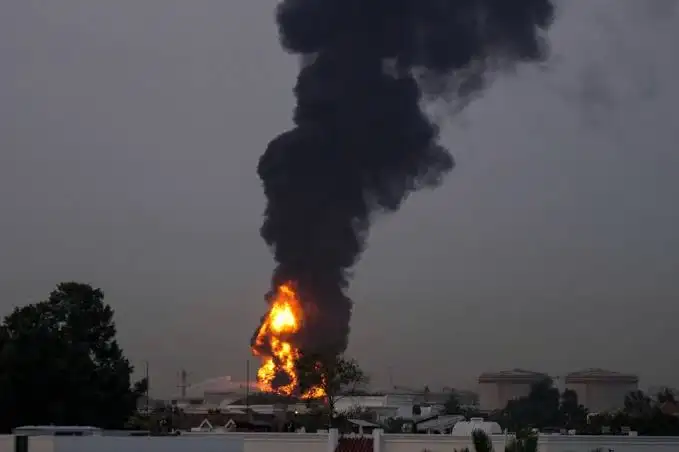
The decision, announced on Thursday, comes in the wake of intensified regional insecurity triggered by a major US Israeli air campaign launched late last month. In retaliation, Iran reportedly carried out waves of missile and drone s targeting multiple Gulf states, leading to casualties and infrastructure damage. The assaults have also forced affected countries to deploy extensive military resources to defend against ongoing threats.
US Secretary of State Marco Rubio invoked emergency powers to push through the arms deal, bypassing the usual requirement for congressional approval. According to the State Department, the urgency reflects the growing need to reinforce defense systems among key US allies in the region.
The largest portion of the deal, valued at $8 billion, includes advanced air and missile defense sensor radars. These systems are designed to detect and track high speed aerial threats and provide critical data for coordinated missile defense operations.
Another significant component is a $4.5 billion agreement with the UAE for long range discrimination radar technology, which is specifically used to identify and track ballistic missile threats. Additional approvals for the UAE include $2.1 billion for counter unmanned aircraft systems, $1.22 billion for advanced air to air missiles, and $644 million for F 16 warplane munitions and upgrades.
The arms package underscores Washington’s continued commitment to strengthening security partnerships in the Gulf, particularly as regional allies face increasing threats from missile and drone warfare.
Analysts say the deal could reshape the strategic balance in the region, while also raising concerns about further militarization amid already heightened geopolitical tensions.










Leave a comment