
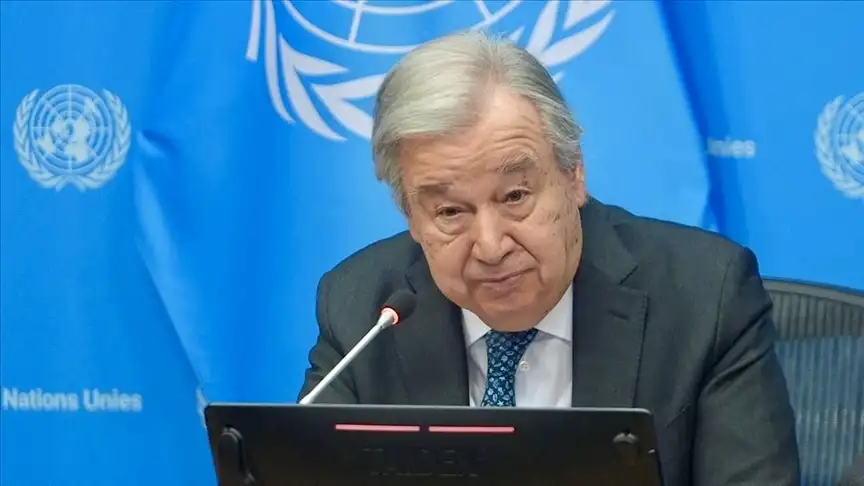
UN Secretary-General António Guterres has renewed the call for the complete decolonisation of Western Sahara and 16 other territories that remain under colonial rule, stressing the need to finish the “unfinished business” of ending colonialism more than six decades after the UN began its formal decolonisation efforts.
Opening the 2026 session of the Special Committee on Decolonisation (C-24), Guterres highlighted that decolonisation has been a core objective of the UN since its foundation, describing the organisation as a platform “where nations can meet as equals, not as rulers and ruled.” He warned that the legacy of colonialism continues to affect the world through economic exploitation, racism, inequality, and exclusion from decision-making processes.
The C-24, elished in 1961, monitors progress toward granting independence to territories that have not yet attained “a full measure of self-government” under Chapter XI of the UN Charter. Since 1945, over 80 former colonies, comprising around 750 million people, have gained independence.
However, Western Sahara, often called “Africa’s last colony,” along with 16 mostly small island territories in the Caribbean and Pacific, remains on the UN list of Non-Self-Governing Territories. Western Sahara, previously colonised by Spain as the Spanish Sahara, became disputed after Spain’s exit in 1976. The Sahrawi Arab Democratic Republic (SADR) currently controls 30 percent of the territory, while Morocco administers about 70 percent and has reportedly sought to end the long-running conflict following talks brokered by U.S. President Donald Trump.
Guterres emphasised that each case must be handled individually in line with the UN Charter, the 1960 Declaration on the Granting of Independence to Colonial Countries and Peoples, and General Assembly resolutions, calling for inclusive dialogue among all stakeholders to advance the decolonisation agenda.





Leave a comment