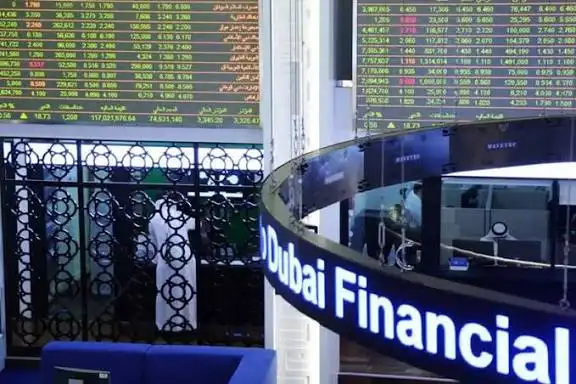
Stock markets in the United Arab Emirates recorded noticeable declines as escalating regional tensions unsettled investors and triggered cautious trading across financial sectors. Major indexes in Abu Dhabi and Dubai moved lower during the latest trading sessions as market participants responded to uncertainty surrounding the expanding conflict in the Middle East. Analysts say the downturn reflects broader concern among investors about how geopolitical developments could influence economic ility and business activity across the region.
Financial experts noted that markets in the Gulf region often react quickly to ces in the geopolitical environment because of their close connection to energy production and global trade routes. When regional tension rises investors frequently reassess risk levels and adjust portfolios accordingly. In the UAE this response has been visible in sectors ranging from banking to real estate and industrial companies, with several widely traded stocks experiencing declines as traders adopted a more cautious stance.
Energy market volatility has also contributed to the shifting mood among investors. Rising oil prices can bring higher revenue for energy producers, but they also create uncertainty for broader economic planning and financial forecasting. Companies that depend on predictable trade flows and tourism activity are particularly sensitive to ces in regional ility. Investors therefore continue to monitor both energy markets and political developments while evaluating the long term outlook for businesses operating in the Gulf.
Market observers emphasize that the UAE remains one of the most diversified economies in the Middle East, with strong financial institutions and significant investment in sectors beyond oil production. Infrastructure development, international trade, and tourism have all played a central role in the country’s economic strategy. However periods of geopolitical tension can still influence investor behavior in the short term, particularly when global markets are already experiencing volatility linked to rising energy prices.
Despite the recent market declines, some analysts believe the region’s long term economic prospects remain le due to ongoing investment programs and international partnerships. Government authorities continue to promote economic diversification while maintaining close coordination with global financial institutions. For now the movement in UAE stock markets illustrates how quickly investor confidence can shift when regional developments create uncertainty across international financial systems.













Leave a comment