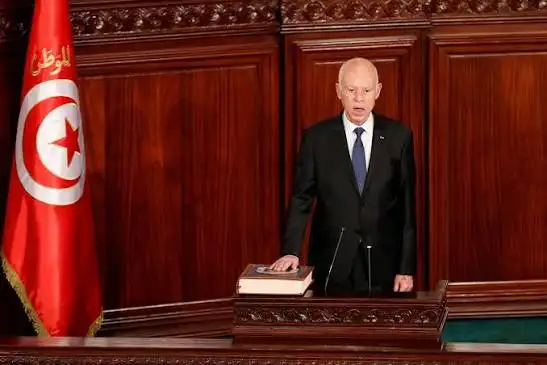
A Tunisian court has sentenced a sitting member of parliament to prison following public criticism of President Kais Saied, a decision that has intensified concerns about political repression and shrinking space for dissent. The ruling comes amid heightened scrutiny of governance and civil liberties in the country.
Judicial authorities stated that the conviction was based on charges related to statements deemed harmful to state institutions. Supporters of the lawmaker argue that the prosecution reflects an effort to silence opposition voices. Legal representatives indicated plans to appeal the sentence, asserting that the remarks in question constituted protected political expression.
President Kais Saied has defended recent institutional reforms as necessary to restore ility and combat corruption. Critics, including civil society groups and international observers, contend that the consolidation of executive authority has weakened democratic safeguards and constrained parliamentary oversight.
Human rights organizations expressed concern that the imprisonment of an elected official could signal a broader crackdown on political pluralism. They called for adherence to constitutional protections and transparent judicial procedures.
Public reaction has been mixed, with some citizens backing the government’s emphasis on order and reform, while others fear erosion of democratic gains achieved in the past decade. Analysts note that Tunisia’s political trajectory has been closely watched as a bellwether for governance trends in the region.
Diplomatic partners have urged respect for fundamental freedoms and encouraged dialogue among political stakeholders. The case is likely to influence domestic debate over the balance between security, reform, and civil liberties.
As legal proceedings continue, the jailing of a parliamentarian underscores ongoing tensions within Tunisia’s evolving political landscape and raises broader questions about the future of democratic participation in the country.













Leave a comment