
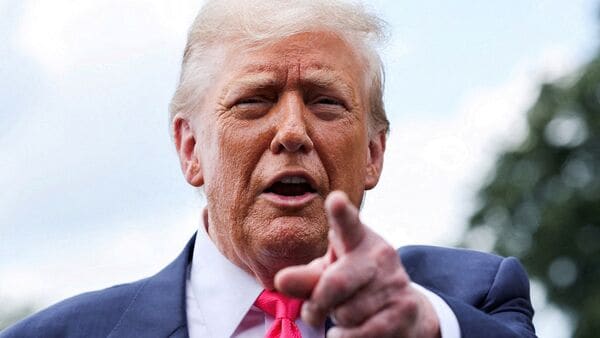
Donald Trump did not quietly introduce chaos into global politics. He placed it front and center, branded it as strength, and treated unpredictability as a governing philosophy. What was once considered a risk in international affairs became, under his leadership, a deliberate tool. The result has been a world constantly on edge, unsure whether American statements signal real intent or calculated provocation.
From alliances to trade to security guarantees, Trump blurred the line between negotiation and threat. Allies accustomed to ility and consistency suddenly found themselves questioning long standing commitments. Adversaries, meanwhile, struggled to determine whether his words were bluster or a prelude to action. This uncertainty reshaped diplomatic behavior across continents.
Trump’s approach rejected the traditional belief that predictability underpins global order. Instead, he embraced disruption as leverage. By keeping everyone guessing, he believed he could extract concessions and maintain dominance. In some cases, this tactic produced short term gains. In many others, it eroded trust built over decades.
The cost of this strategy has been borne widely. European partners were forced to rethink their reliance on Washington as tariffs, public rebukes, and threats replaced quiet coordination. Asian allies recalibrated their security planning as American guarantees appeared increasingly conditional. Even institutions designed to manage conflict and cooperation found themselves weakened by sudden withdrawals and policy reversals.
For adversaries, unpredictability did not necessarily lead to restraint. In some cases, it encouraged opportunism. When red lines appear movable and commitments sound negotiable, rivals test limits. The absence of clarity creates space for miscalculation, raising the risk of escalation rather than deterring it.
At home, Trump framed this chaos as proof of toughness. He argued that discomfort among allies was evidence that the United States was no longer being taken advantage of. Yet leadership in global politics has never been solely about pressure. It has relied just as much on credibility, consistency, and the confidence of partners.
What made Trump’s style particularly deilizing was not disagreement with allies or confrontation with rivals. Those are constants in international relations. It was the sense that policy could ce overnight, driven by impulse rather than strategy. Diplomacy became reactive, shaped by headlines and personal instincts instead of long term planning.
The legacy of this approach continues to ripple outward. Governments now hedge more aggressively, diversify alliances, and prepare for sudden shifts from Washington. The world has adapted, but at a cost. Cooperation has grown harder, trust thinner, and crises more difficult to manage.
Trump turned unpredictability into a weapon, but weapons rarely affect only their targets. They alter the entire battlefield. In this case, the battlefield was the global order itself, and the aftershocks are still being felt.








I think Trumps unpredictability kept other countries on their toes. Its like playing chess with a wildcard player!
I think its crazy how Trumps unpredictability is both thrilling and terrifying. The world is definitely on a rollercoaster ride!
I find it fascinating how Trumps unpredictability has shaped global dynamics. Who knew chaos could be so influential?
I cant wrap my head around how Trumps unpredictability is seen as powerful. Its like trying to understand quantum physics after a night of tequila shots.
I mean, sure, Trump was unpredictable, but did it really translate into power? Im not convinced. What do you think?
I disagree! Trumps unpredictability kept other countries on their toes. Its like a wild card in a game of global politics.