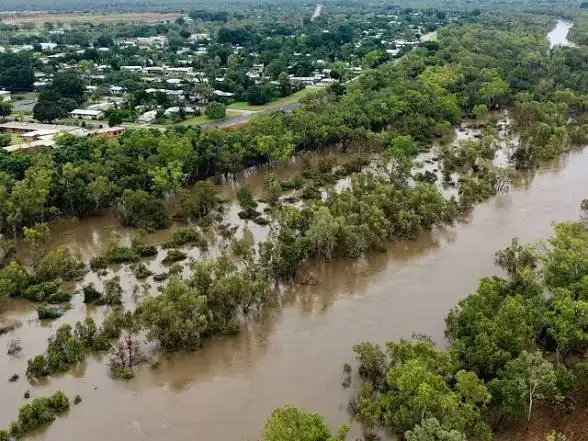
Emergency authorities across northern Australia activated disaster response plans as Tropical Cyclone Narelle brought torrential rainfall, powerful winds, and dangerous storm surges to coastal and inland communities. Rivers rose rapidly overnight, inundating roads, homes, and farmland while evacuation orders expanded. Meteorological officials warned that saturated catchments increased flash flooding risks and complicated rescue logistics statewide during current operations.
State emergency services deployed swift water rescue teams, high clearance vehicles, and aerial surveillance to reach isolated residents. Temporary shelters opened in schools and community centers with essential supplies and medical support. Power outages affected thousands as utility crews assessed damage to transmission lines and substations amid hazardous conditions and continuing heavy rainfall across multiple affected regions today.
Transport disruptions intensified as highways closed, regional flights were suspended, and rail services faced washouts. Maritime authorities restricted port movements due to rough seas and debris risks. Supply chains for food and fuel experienced delays, prompting contingency planning by retailers and distributors to maintain availability for remote towns and vulnerable populations through coordinated logistics support measures nationwide ongoing.
Hydrologists monitored river basins and dam levels continuously, issuing alerts as thresholds approached critical markers. Local councils coordinated sandbag distribution and drainage clearance to reduce urban inundation. Environmental agencies tracked coastal erosion and water quality impacts while advising fisheries and tourism operators on safety precautions and operational adjustments for communities businesses and visiting travelers across northern regions today.
Health authorities emphasized preparedness for waterborne illness, heat stress, and injury prevention during cleanup efforts. Mobile clinics expanded outreach to evacuation centers and remote settlements. Mental health support lines increased staffing to assist affected families coping with displacement, property loss, and prolonged uncertainty linked to severe weather conditions and complex recovery requirements ahead for many households and communities.
Federal and state governments coordinated funding arrangements and resource deployments to accelerate response operations. Defense personnel assisted with airlift missions and engineering tasks supporting access restoration. Insurance representatives elished temporary claims centers while financial institutions offered hardship assistance to households and small businesses facing disruption from flooding wind damage and closures across impacted districts and regions nationwide today.
Forecasters projected gradual easing of rainfall bands while cautioning that residual flooding could persist in low lying areas. Recovery planning prioritized debris removal, infrastructure repairs, and community outreach. Authorities encouraged residents to follow official updates and safety guidance as assessments continued and rebuilding strategies advanced with coordinated support from partners across government industry and civil society networks nationwide.









Leave a comment