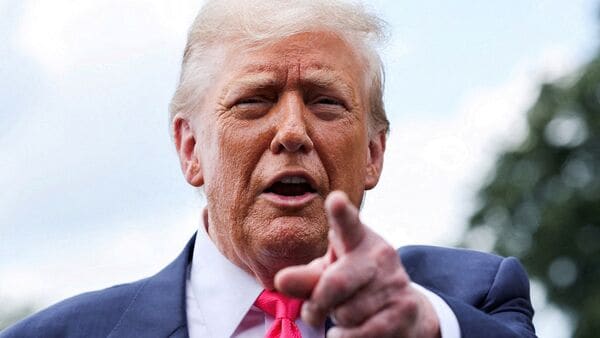
The U.S. Supreme Court is currently considering a significant case that could alter the relationship between the executive branch and independent federal agencies. Central to this case is President Donald Trump’s dismissal of Federal Trade Commission (FTC) member Rebecca Slaughter in March 2025, which challenges the 1935 precedent set in Humphrey’s Executor v. United States. This ruling has historically granted certain federal agencies independence by restricting presidential powers to remove their members.
Trump justified Slaughter’s removal by stating it contradicted his administration’s priorities. This prompted legal disputes, with Slaughter and her advocates claiming that the dismissal breached the FTC Act, which allows presidential removal only for specified reasons like neglect or malfeasance. The implications of this case are substantial, as it could reshape the functions and authority of independent agencies.
During oral arguments, conservative justices appeared to support the president’s ability to dismiss Slaughter without cause. Chief Justice John Roberts questioned the relevance of the Humphrey’s Executor ruling, while Justice Neil Gorsuch expressed skepticism toward the notion of independent agencies operating without direct presidential supervision. In contrast, liberal justices warned that overturning this precedent could enhance presidential power, leading to a politicized environment in agencies meant to operate with nonpartisan expertise. Justice Ketanji Brown Jackson articulated concerns about qualified officials being replaced by loyalists, undermining the integrity of independent agencies.
The Court’s ruling, expected by June 2026, will profoundly affect the autonomy of federal agencies such as the FTC and Federal Reserve, influencing the future of federal regulatory authority and the extent of presidential power over independent agency members.












Wow, can you believe the Supreme Court is leaning towards giving Trump more power over independent agencies? What do you think about this?
Im not sure about this. Is it really a good idea for Trump to have so much control over independent agencies? Seems kinda sketchy.
This decision seems to give too much power to one person. What about checks and balances? Soing seems off here.
Wow, cant believe the Supreme Court is backing Trumps control over independent agencies. What do you all think about this? Seems controversial to me.
I cant believe the Supreme Court might give Trump more power over independent agencies. Whats next, a dictatorship? This is wild!
Wow, can you believe the Supreme Court is leaning towards giving Trump more power over independent agencies? Thats wild!
Wow, can you believe the Supreme Court is siding with Trump on this? Seems like a power move. What do you all think?
I cant believe the Supreme Court is siding with Trump on this! Is this setting a dangerous precedent for independent agencies?