
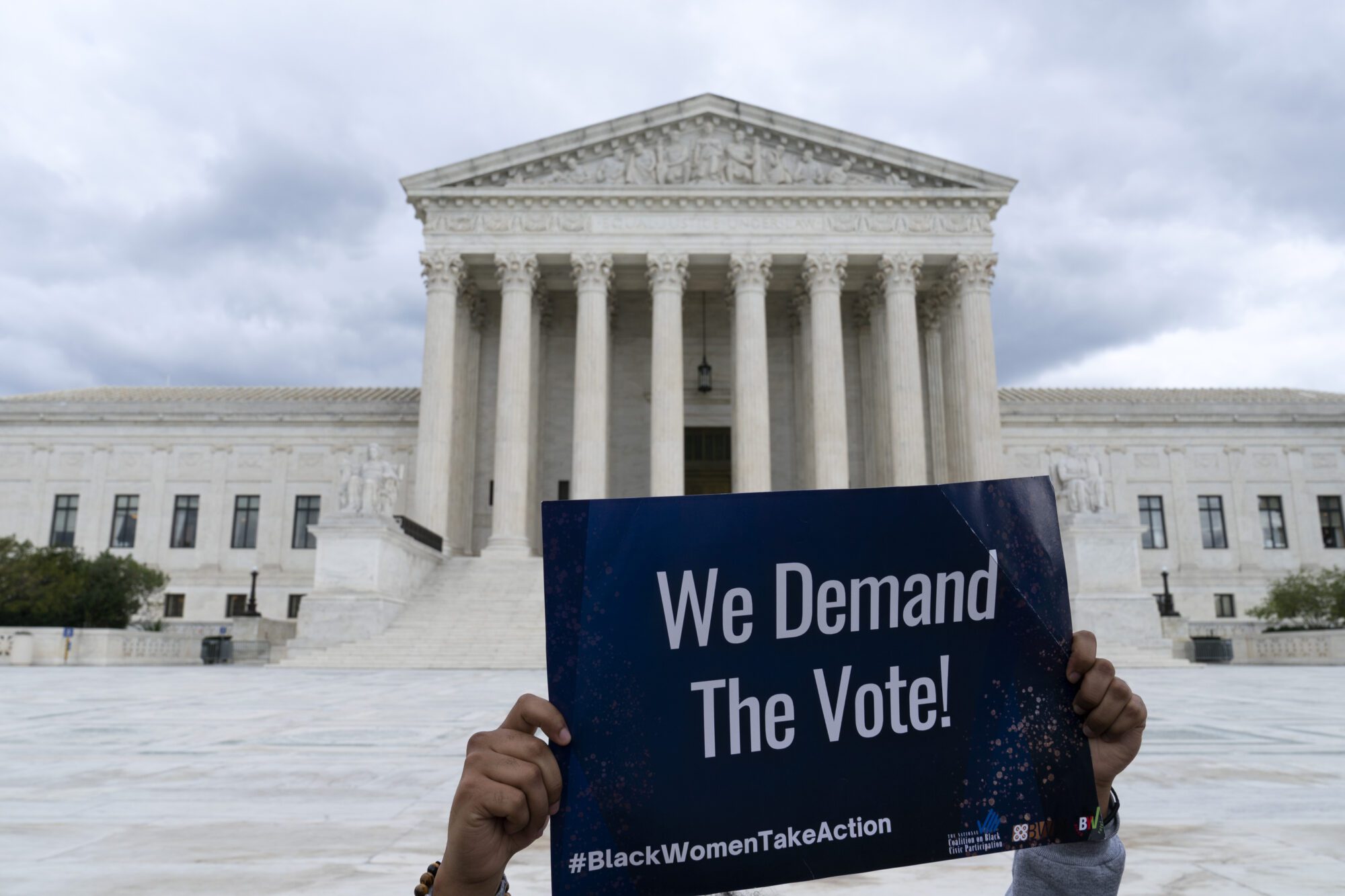
The U.S. Supreme Court recently heard a pivotal case concerning the Voting Rights Act, focusing on Louisiana’s congressional redistricting efforts. The central issue was whether the state’s new electoral map, which increased the number of Black-majority districts, violated the Equal Protection Clause of the Constitution.
In response to a lawsuit from civil rights groups, the Louisiana legislature redrew its congressional map to create a second majority-Black district out of six districts in the state. The Supreme Court is being asked to decide whether the map violates the Constitution. The ruling could affect the balance of power in Congress, the landmark Voting Rights Act, and how states consider race in drawing electoral maps.
At oral arguments, several conservative justices expressed skepticism about the compatibility of the Voting Rights Act’s remedial measures with the Equal Protection Clause. They questioned whether the creation of a second majority-Black district was predominantly based on racial considerations or political strategy. Chief Justice John Roberts, who authored the court’s opinion in a similar Alabama case requiring a second majority-Black district, appeared doubtful about the compactness of Louisiana’s new district, describing it as a “snake that runs from one end of the state to the other.”
In contrast, the court’s three liberal justices seemed inclined to uphold the creation of the second Black-majority district, emphasizing the importance of the Voting Rights Act in protecting minority voting rights. They argued that the legislature’s actions were a necessary response to previous legal challenges and aimed to comply with federal mandates.
The case has significant implications for the application of the Voting Rights Act, particularly concerning the use of race in redistricting. A ruling favoring the challengers could make it more challenging for minority groups to secure favorable electoral maps, potentially leading to a reevaluation of how states approach redistricting to comply with federal voting rights protections.
As the Supreme Court deliberates on this case, the nation awaits a decision that could reshape the landscape of voting rights and electoral representation, underscoring the ongoing tension between efforts to rectify historical racial disparities and constitutional principles of equal protection.



Shouldnt the Supreme Court prioritize protecting voting rights over everything else? Its the foundation of democracy, after all. #ProtectOurVote
I think its crazy that this voting rights case is even a debate. Shouldnt everyone have equal access to vote? Just my thoughts.
Interesting how the Supreme Court is tackling voting rights. Wonder if this case will lead to significant changes in our democracy. 🤔
Interesting how the Supreme Court is handling this voting rights case. Wonder how itll impact future elections. Thoughts?
Should the Supreme Court have more power over voting rights? Or is it better left to individual states? What do you think?
Should voting rights be restricted to prevent fraud, or is it essential to ensure every citizens voice is heard? What do you think?
Cant believe this case is even up for debate. Voting rights should be a no-brainer, right? Whats the fuss?
Isnt it crazy how voting rights can still be up for debate in this day and age? Lets hope the Supreme Court makes the right call.