
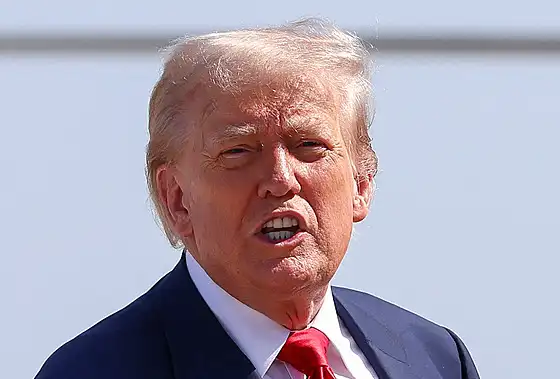
The U.S. Supreme Court is likely to expand presidential authority over independent federal agencies, casting doubt on elished protections for agency independence set by the 1935 case Humphrey’s Executor v. United States. This shift emerges from a case involving former President Donald Trump’s March 2025 dismissal of Federal Trade Commission (FTC) member Rebecca Slaughter, a decision that has faced legal challenges.
Conservative justices express concerns about the power of unelected officials, arguing that such protections may undermine the president’s constitutional oversight of the executive branch. They view the ability to remove agency members without cause as essential for accountability to the electorate. Conversely, liberal justices warn that overturning Humphrey’s Executor could centralize power excessively within the executive branch, risking the effectiveness and independence of regulatory agencies.
The Court’s conservative majority has demonstrated a trend toward relaxing limitations on presidential removal powers. In a 2020 ruling, Chief Justice John Roberts stated that the president’s removal power is generally the norm, citing Trump’s dismissal of the Consumer Financial Protection Bureau head, despite protections.
The pending ruling could significantly impact the structure and operation of independent federal agencies. A decision favoring the administration would likely boost executive influence over agencies like the FTC, Federal Reserve, and the Consumer Product Safety Commission. In contrast, upholding existing precedents would protect agency autonomy and maintain a critical balance between executive authority and independent oversight.
A final ruling is anticipated by June 2026, which will clarify the limitations of presidential authority over agency board members and potentially reshape the framework of federal regulatory bos.











Wow, cant believe the Supreme Court might give Trump more power. This could have major implications. What do you guys think?
Wow, can you believe the Supreme Court might back Trump on this? Its like a never-ending rollercoaster of surprises in politics!
I cant believe the Supreme Court might give Trump more power! What do you all think about this? Its a wild world out there.
I cant believe the Supreme Court is siding with Trump on this one. Its like theyre giving him free rein!
I cant believe the Supreme Court might give Trump more power. Its like giving a toddler a chainsaw. Scary stuff.
Wow, this decision could have major implications for the balance of power. What do you all think about the Supreme Courts stance on this?
I dont get why the Supreme Court is backing Trump on this. Its like theyre giving him a free pass. Soing fishy going on here!
Im not sure about this one… Do you think the Supreme Court is leaning too much in favor of Trumps authority? #Discuss
I dont get why the Supreme Court is siding with Trump on this. It feels like a power grab to me.