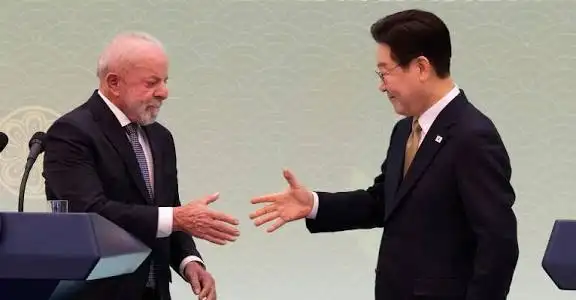
South Korea and Brazil have agreed to deepen cooperation in critical minerals, trade, and strategic supply chains, marking a significant step in strengthening ties between the two major economies. The announcement followed high level talks between government officials aimed at enhancing resilience in the face of global market volatility.
In a joint statement, representatives from both countries outlined plans to collaborate on the exploration, processing, and export of essential minerals used in advanced manufacturing and clean energy technologies. The agreement reflects growing demand for secure access to resources vital for electric vehicles, semiconductors, and renewable energy infrastructure.
Brazil is among the world’s leading producers of several strategic minerals, while South Korea is a global manufacturing powerhouse heavily reliant on imported raw materials. Officials said c coordination would benefit both sides by diversifying supply sources and encouraging investment.
The partnership also includes commitments to facilitate bilateral trade and reduce regulatory barriers. Business leaders from both nations participated in forums alongside the diplomatic meetings, highlighting opportunities in technology exce and industrial development.
Analysts view the move as part of a broader trend of countries seeking to insulate supply chains from geopolitical disruptions. Recent trade tensions and shifts in tariff policies have underscored vulnerabilities in global production networks.
South Korean officials emphasized that cooperation with Brazil would complement existing agreements with other resource rich nations. Brazilian authorities, meanwhile, pointed to the potential for job creation and technology transfer stemming from increased foreign investment.
Both governments signaled their intention to elish working groups tasked with implementing the framework and identifying priority projects. While no specific financial figures were disclosed, officials indicated that private sector participation would play a central role.
The agreement illustrates how emerging and elished economies are recalibrating partnerships to secure long term economic ility. As competition intensifies over access to critical materials, such bilateral initiatives are likely to gain strategic importance in shaping future trade dynamics.











Leave a comment