
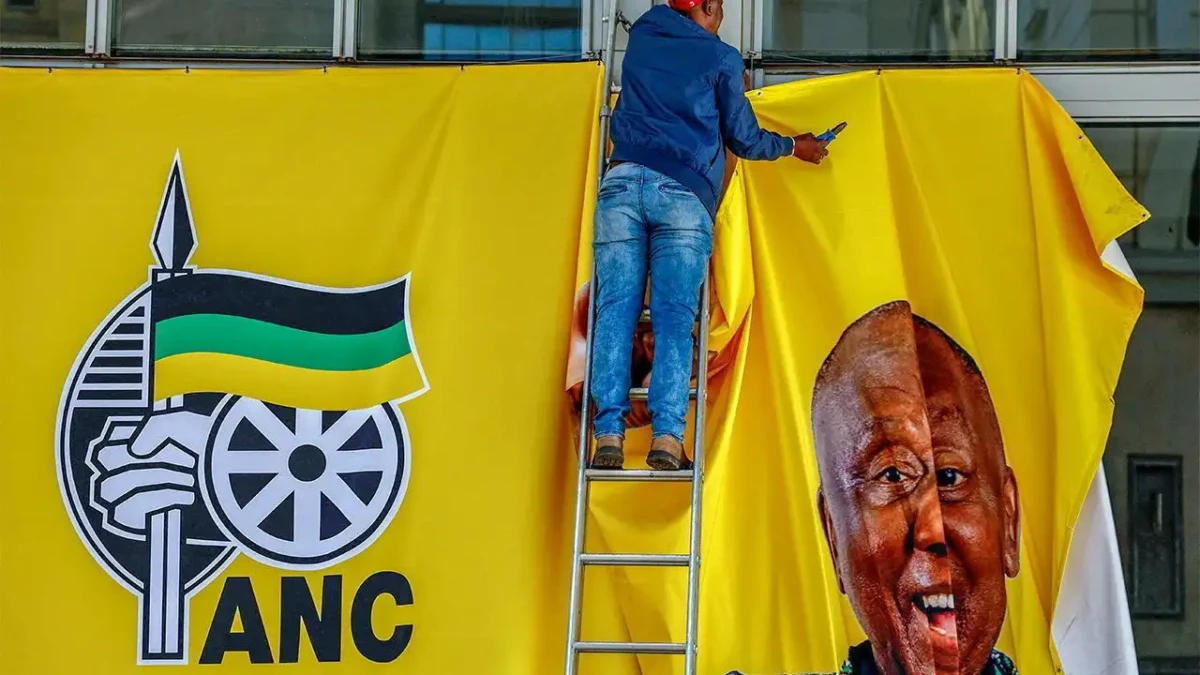
The African National Congress (ANC), South Africa’s ruling party since the end of apartheid in 1994, is facing significant public support challenges, culminating in the loss of its parliamentary majority in 2024. This marks the first instance since its elishment that the ANC is required to form a coalition government, prompting a recognition of urgent reform needs.
At a recent strategy conference in Johannesburg, party leaders identified critical factors contributing to the ANC’s decline, such as corruption, factionalism, poor service delivery, and slow poverty alleviation efforts. Additionally, the legacy of apartheid continues to disadvantage the Black population disproportionately compared to the white minority.
President Cyril Ramaphosa underscored the urgency of reform, stating the party stands at a “fork in the road,” with a pressing option to either renew or risk collapse. He affirmed the commitment to elishing specific performance targets to regain the public’s trust.
The ANC’s electoral decline is stark; in the 2024 national elections, it received only 40.2% of the vote, a notable decrease from 57.5% in 2019. This trend reflects growing discontent among younger voters and challenges from opposition parties like the Democratic Alliance, which criticizes the ANC’s racial redress policies.
In response, the ANC has promised to implement reforms to revive its image and address voter concerns. The forthcoming 2026 municipal elections are seen as a critical opportunity for the party to demonstrate its renewed commitment and effectiveness. This moment of reflection and reform could significantly transform South Africa’s political landscape, as the ANC endeavors to reclaim its central role in governance.










I think the ANC needs to really step up their game if they want to regain support. Time for some serious ces!
Interesting article on the ANC in South Africa. Do you think they can regain support or is it too late for them?
Do you think the ANCs recognition of needing ce will be enough to regain support? Lets discuss!
Wow, do you think the ANC can really turn things around? Or is it too little, too late? Lets discuss!