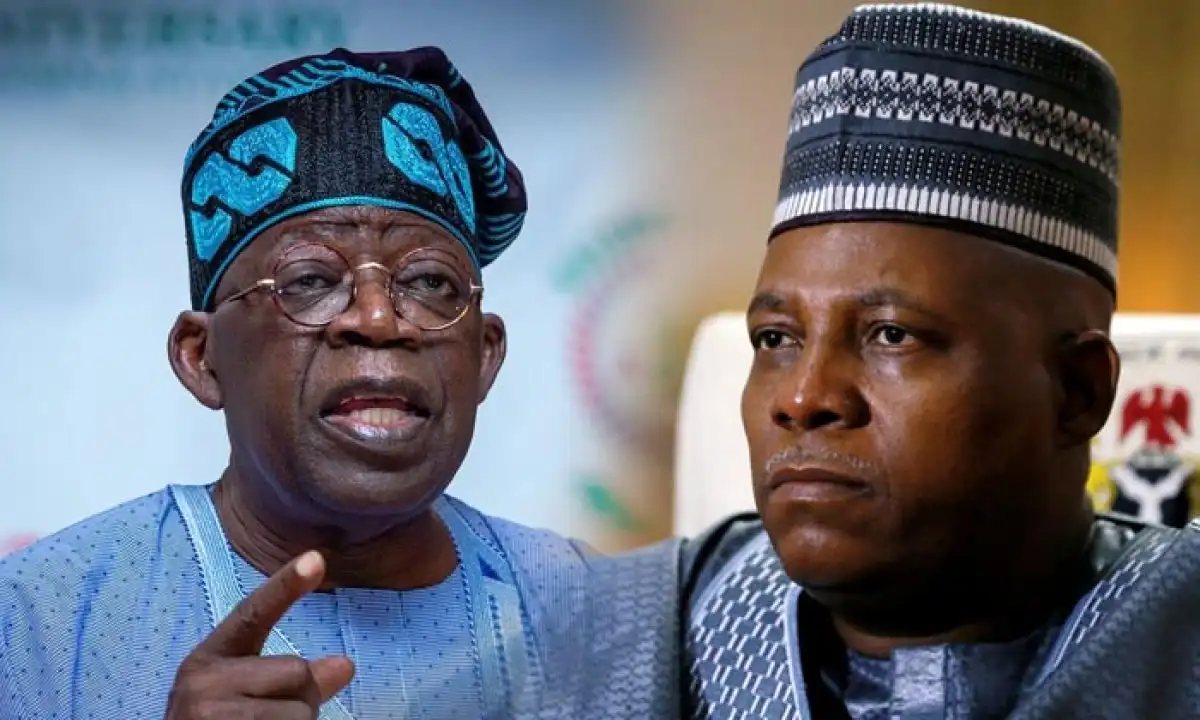
At the North-East Zonal Public Hearing of the All Progressives Congress (APC) in Maiduguri, Abdulkarim Lawan, Speaker of the Borno State House of Assembly, noticed the absence of Vice President Kashim Shettima from the event banner, which featured President Bola Tinubu, governors, and senior party officials. The omission, previously seen in Gombe State, raised suions of a deliberate slight and triggered applause from attendees.
The exclusion of Shettima’s image has intensified speculation within the APC that President Tinubu may replace him on the 2027 presidential ticket. The discussion stems from debates around the Muslim–Muslim ticket and perceived pressure for religious balance, including scrutiny from foreign observers like the United States. Analysts warn that replacing Shettima—a trusted northern figure and former Borno governor—could deilize the party, alienate the North-East, and weaken Tinubu’s electoral prospects.
Supporters in the North-East, including the APC Youth Parliament, argue that Shettima is the region’s most unifying political figure and a vital bridge between the presidency and local constituencies. Calls to replace him have been dismissed by the North-Central APC Forum, which denies interest in the vice-presidential slot and emphasizes strategic positioning for 2031.
Observers note that loyalty, consistency, and grassroots support make Shettima indispensable to the APC’s cohesion in the north. Political commentators describe speculation about his removal as disruptive, potentially eroding Tinubu’s support base ahead of the 2027 elections. Despite mounting debate, Shettima has remained silent publicly, neither addressing the banner omission nor the rumors regarding his political future.
The episode underscores the sensitive interplay of regional loyalty, religious considerations, and strategic calculations within Nigeria’s ruling party as it navigates positioning for the next general election.







Is Shettimas absence a strategic move or a sign of internal rift within the APC? Speculation is rife! What do you think?
I find it strange that Shettimas absence from the APC banner is causing speculation. Whats really going on behind the scenes? 🤔
Wow, Shettima missing from the APC banner? Conspiracy theories brewing for 2027? Whats really going on behind the scenes? 🤔
Do you think Shettimas absence from the APC banner means hes out of the game? Speculate away! #politics #2027elections
I find it strange that Shettimas absence is causing such speculation. Maybe hes just busy or not into banners? Who knows!
I wonder if Shettimas absence from the APC banner really means anything for 2023. Politics is always full of surprises!
Do you think Shettimas absence from the APC banner is a strategic move or a sign of internal conflict? Curious to hear your thoughts!
I cant believe Shettimas absence caused such speculation! Its all just gossip, right? Who knows whats really going on.
Do you think Shettimas absence from the APC banner means hes planning soing big for 2027? Intriguing speculation!