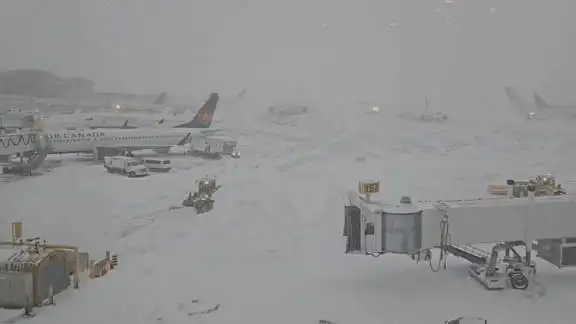
A powerful snowstorm swept across parts of eastern Canada, severely disrupting operations at Toronto Pearson International Airport and triggering widespread travel delays across multiple continents. Airport authorities confirmed that heavy snowfall, strong winds, and reduced visibility forced the cancellation and delay of hundreds of flights, leaving thousands of passengers stranded.
Ground crews worked continuously to clear runways and taxiways, but persistent weather conditions limited operational capacity. Airlines implemented contingency plans, including rebooking passengers and arranging temporary accommodation where possible. However, the scale of disruption quickly extended beyond Canada, as international carriers adjusted schedules in response to aircraft displacement and crew availability challenges.
Meteorological agencies warned that the storm system brought intense snowfall accumulations and freezing temperatures, complicating de icing procedures and ground handling services. Officials advised travelers to monitor flight updates and avoid unnecessary travel until conditions improved.
Transportation analysts noted that Toronto serves as a major North American aviation hub, meaning disruptions there can ripple across transatlantic and transpacific routes. Business travelers, cargo shipments, and tourism flows were all affected, highlighting the vulnerability of global air networks to extreme weather events.
Authorities emphasized passenger safety as the top priority while pledging to restore normal operations as swiftly as conditions allow. The incident has renewed discussions about climate resilience and infrastructure preparedness within the aviation sector.













Leave a comment