
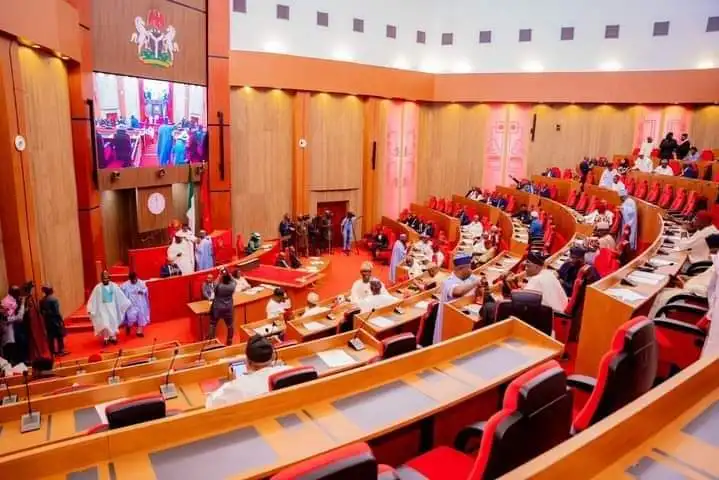
The House of Representatives on Monday reiterated its commitment to strengthening institutions tasked with combating financial crimes in Nigeria, aiming to enhance the country’s global standing.
Chairman of the House Committee on Financial Crime, Ginger Onwusibe, made the statement during a budget defence session with the Economic and Financial Crimes Commission (EFCC) and the Nigeria Financial Intelligence Unit (NFIU). He highlighted that the 2026 budget prioritises infrastructure and food security, with objectives including macroeconomic ility, job creation, human capital development, and an improved business environment.
Onwusibe emphasised that effective implementation depends on timely budget execution, increased oil production, and growth in non-oil revenues. He acknowledged the economic challenges Nigerians face and stressed the need for practical solutions to stimulate growth and improve living standards, noting that the International Monetary Fund projects 4.4 percent growth in 2026.
He underscored the importance of patriotic collaboration, stating, “The EFCC and NFIU play vital roles in combating financial crimes, which are a significant drain on our economy. Your work is crucial in recovering stolen assets, deterring corruption, and enhancing financial ility.”
The committee is considering four key bills to modernise laws, bridge operational gaps, enhance enforcement, and ensure financial crimes do not pay. These include bills to amend the EFCC Act, the Money Laundering (Prevention and Prohibition) Act, and the Proceeds of Crime Act, among others.
Onwusibe commended the agencies for Nigeria’s recent delisting from the Financial Action Task Force (FATF) grey list, which he said would improve international credibility, attract foreign investment, and strengthen financial security. He cited EFCC recoveries of over ₦566 billion, $411 million, 1,502 properties, and 3,175 convictions as evidence of their effectiveness.
He concluded by affirming the committee’s support for EFCC and NFIU, stressing the need for professionalism, transparency, and accountability, while ensuring the agencies have the resources to continue their vital work.











Leave a comment