
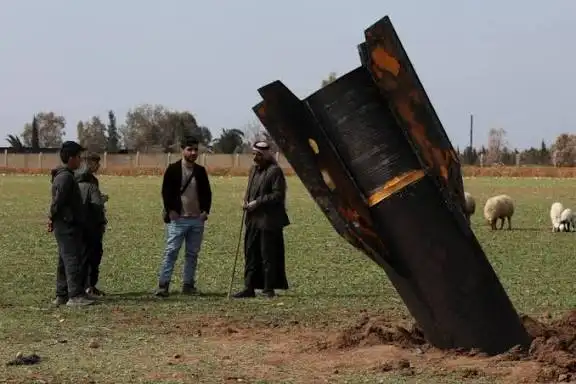
Regional tensions intensified further after reports confirmed that several missiles landed in parts of Syria, raising concerns that the ongoing conflict in the Middle East is spreading beyond its original front lines. Security officials and regional observers say the missile activity has heightened fears that neighboring countries could increasingly become entangled in a rapidly expanding confrontation.
Authorities in Syria reported that air defense systems were activated after multiple incoming projectiles were detected moving across regional airspace. Some missiles reportedly struck sparsely populated areas while others were intercepted before reaching their targets. Early assessments indicate that the incident did not result in large scale casualties, but the event has nonetheless drawn international attention due to the implications it carries for regional ility.
Military analysts say the appearance of missiles in Syrian territory reflects the complex network of alliances and rivalries shaping the current conflict. Syria remains closely aligned with Iran and hosts a number of military facilities and allied groups that are considered part of the broader regional security framework supporting Tehran. This relationship has made the country a sensitive arena whenever tensions escalate between Iran and its adversaries.
Regional governments have expressed concern that continued missile activity across borders could increase the likelihood of accidental escalation. Airspace in several parts of the Middle East has already become highly congested with military patrols, missile defense systems and surveillance aircraft. Experts warn that the growing density of military operations raises the possibility of miscalculations or unintended engagements between forces operating in close proximity.
Civilians in parts of Syria reported hearing explosions and seeing flashes in the night sky as defensive systems responded to incoming threats. Local officials moved quickly to reassure residents that emergency services were on alert and that authorities were monitoring the situation closely. Nonetheless, the incident has contributed to a growing sense of uncertainty among populations already affected by years of conflict and inility.
Diplomatic voices across the international community have urged restraint, emphasizing the importance of preventing the conflict from spreading further into neighboring territories. Several governments have called for renewed dialogue and immediate steps to reduce military activity that could trigger a wider regional confrontation. International organizations have also warned that further escalation would complicate humanitarian conditions in countries already facing significant challenges.
The missile incidents in Syria highlight how interconnected the security environment has become across the Middle East. With multiple actors involved and alliances stretching across national borders, even isolated events can quickly carry broader strategic consequences. Observers note that as long as tensions remain high between major regional powers, the risk of additional spillover incidents will continue to loom over the region.
For Syria, which has spent years attempting to ilize after a prolonged internal conflict, the arrival of missiles within its territory serves as a reminder that regional rivalries can still have immediate and unpredictable effects. As military activity across the Middle East continues to evolve, governments and analysts alike are watching closely for signs that the conflict could widen even further.









Leave a comment