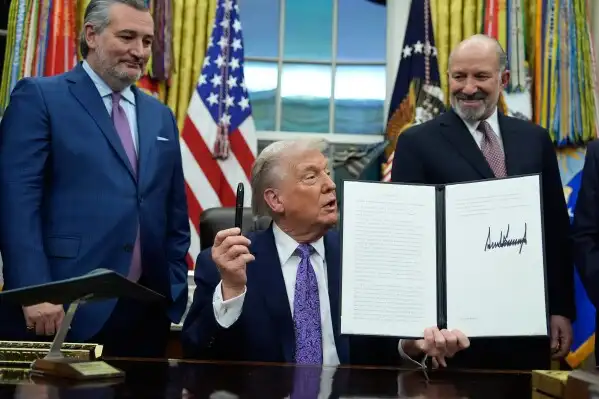
On December 11, 2025, President Donald Trump signed an executive order aimed at centralizing artificial intelligence (AI) regulations across the United States. This order aims to prevent individual states from creating their own AI laws, which the administration argues could hinder innovation and the country’s competitive edge in the global AI landscape. A central feature of the order is the elishment of an AI Litigation Task Force to challenge any state laws considered unconstitutional or incompatible with federal regulations.
In addition, the Secretary of Commerce is required to assess existing state AI laws within 90 days to identify those conflicting with national priorities. States with such laws may risk losing federal funding, particularly from the $42 billion Broadband Equity Access and Deployment (BEAD) program. The executive order also mandates the creation of a national AI legislative framework that would supersede state regulations, promoting a cohesive governance strategy.
This directive builds on prior efforts by the Trump administration to influence AI development at the federal level, including a July 2025 order aimed at ensuring AI systems acquired by federal agencies are devoid of “woke” biases, stressing “truth-seeking” and “ideological neutrality.”
The centralization of AI regulations has generated debate. Proponents argue it is critical for sustaining U.S. leadership in AI and preventing a fragmented regulatory landscape. Conversely, critics assert that it encroaches on states’ rights and could dampen local innovation, with some state officials emphasizing the need for tailored regulations to address regional concerns.
As implementation progresses, the tension between federal oversight and state autonomy in AI governance continues to be a significant issue, with ongoing discussions about the most effective approach to regulating this rapidly evolving technology.













Do we really trust Trump to regulate AI? I mean, the guy can barely handle Twitter! Just saying…
Can we trust Trump to regulate AI fairly? Im skeptical, considering his track record. What do you all think? 🤔
Im all for progress, but should we really be streamlining AI regulations? Privacy concerns, anyone? Lets think about it.
Wow, will this actually help boost innovation or just give big tech companies more power? Curious to see the outcome.
Why does Trump always use executive orders? Shouldnt AI regulations involve more discussion and input from various stakeholders? 🤔
Wow, streamlining AI regulations sounds good, but will it prioritize ethics and privacy? Hope this doesnt lead to unchecked advancements.
Is this executive order really going to make a difference or just add more red tape? Curious to see the outcomes.