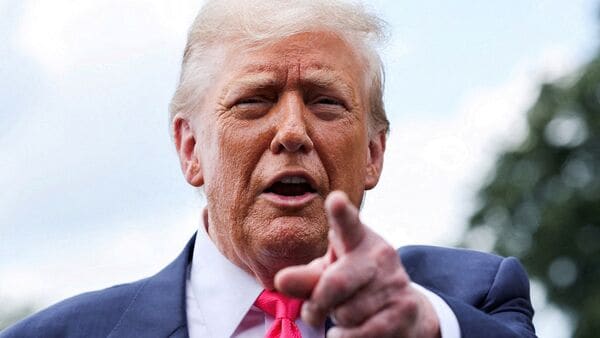
President Donald Trump has announced a 100% tariff on imported computer chips, aiming to bolster domestic manufacturing and reduce reliance on foreign supply chains. The new policy, unveiled during a meeting with Apple CEO Tim Cook, stipulates that companies manufacturing chips within the United States will be exempt from the tariff. This move is part of a broader strategy to incentivize U.S. companies to elish or expand manufacturing operations domestically.
Apple has responded by committing an additional $100 billion to U.S. manufacturing, bringing its total investment to $600 billion. This substantial investment is expected to include the construction of new facilities and the expansion of existing ones, particularly in the semiconductor sector.
The company’s decision underscores a growing trend among major tech firms to localize production in response to the new tariff regime.
The tariff is set to apply to all imported chips and semiconductors, with the exemption for companies that manufacture or commit to manufacturing in the U.S. This policy aims to encourage firms to shift production to the United States to avoid the high cost of the tariff.
However, the move has raised concerns about potential increases in consumer prices for electronics, automobiles, and household appliances, as these products often rely on imported chips.
International reactions have been mixed. South Korea’s Samsung and SK Hynix are reportedly exempt from the steep tariffs due to favorable trade terms. In contrast, industry figures in the Philippines and Malaysia have expressed concerns about the potential negative impacts on their economies. The European Union is also considering diversifying its trade alliances in response to the U.S. policy shift.
The United States currently produces about 12% of the world’s chips, and the new tariff is expected to accelerate efforts to increase domestic production. While large, cash-rich firms like Apple are well-positioned to invest in U.S. facilities, smaller companies may face challenges in meeting the new requirements. The full impact of the tariff on global trade and the semiconductor industry remains to be seen, as companies assess the feasibility of reshoring production and the potential costs involved.
This policy marks a significant departure from previous strategies aimed at revitalizing domestic chip production, such as the CHIPS and Science Act, which provided federal funding to support new semiconductor plants and research initiatives. The current approach relies on imposing tariffs to incentivize companies to relocate manufacturing to the U.S., reflecting a more protectionist stance in trade policy.
As the situation develops, stakeholders across the technology and manufacturing sectors are closely monitoring the implications of the new tariff, particularly concerning supply chain adjustments, investment decisions, and potential shifts in global trade dynamics.













Isnt this tariff just hurting consumers in the end? Prices will skyrocket! Not a smart move, in my opinion.
This seems like a short-term solution. What about the long-term impact on consumers and global trade? Will it really benefit domestic manufacturing?
I think this move could backfire and hurt consumers. Prices will go up, and innovation could suffer. What do you all think?
I dont get why Trump is imposing a 100% tariff on computer chips. Isnt that just going to make tech more expensive for everyone?
Why punish consumers with higher prices on tech products? Protecting jobs at the expense of innovation seems shortsighted.
Why not invest in innovation and technology instead of resorting to protectionist measures like imposing tariffs on computer chips?
This move could backfire if other countries retaliate. Is protectionism really the best way to boost domestic manufacturing?
Wow, cant believe Trump did that! Do you think this will actually help boost domestic manufacturing or just hurt consumers?
This decision could spark a trade war! Lets hope it doesnt backfire and hurt consumers in the long run.
This tariff move could backfire – what about the impact on consumers and global supply chains? Is this really the best approach?
Wow, Trump really going all out with that 100% tariff on computer chips. Will this really boost domestic manufacturing or just hurt consumers? 🤔
Wow, is this move really going to help or hurt the economy in the long run? Seems risky, but could be interesting to see the outcome.