
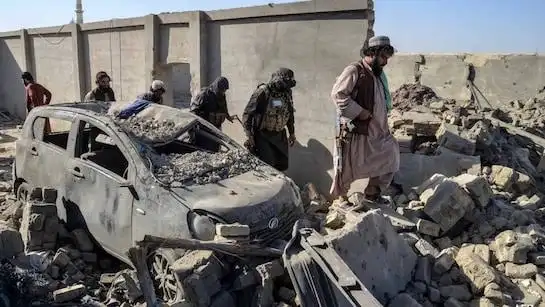
Pakistan has carried out airstrikes against Taliban government targets inside Afghanistan, marking a sharp escalation in cross border hostilities that officials from both sides now describe as open warfare. The strikes reportedly targeted militant infrastructure and security positions in eastern Afghan provinces near the shared frontier, an area that has witnessed mounting tensions in recent months.
Pakistani security officials stated that the operation was aimed at dismantling what they described as safe havens used by armed groups launching attacks into Pakistani territory. According to military sources in Islamabad, the strikes were conducted after a series of deadly incidents targeting Pakistani security personnel along the border. Authorities characterized the action as a defensive response to persistent cross border threats.
The Taliban administration in Kabul condemned the bombardment, accusing Pakistan of violating Afghan sovereignty. Afghan officials reported casualties and damage to infrastructure, though precise figures remain contested. Taliban representatives warned that any further military incursions would be met with retaliatory measures, raising fears of sustained confrontation between the two neighboring states.
Diplomatic channels between Islamabad and Kabul appear strained, with both governments trading accusations over responsibility for rising militancy in the frontier region. The situation represents one of the most serious crises in bilateral relations since the Taliban returned to power in 2021. Analysts note that longstanding disputes over border demarcation and the presence of armed groups have fueled mistrust for years, but the latest exchange signals a significant deterioration.
The outbreak of fighting has drawn widespread international concern. The United Nations called for immediate restraint and urged both sides to pursue dialogue to prevent further civilian harm. Regional powers including China and Iran emphasized the importance of stability in South and Central Asia, warning that escalating violence could disrupt trade corridors and humanitarian operations.
The United States expressed concern over the clashes and encouraged both governments to de escalate through diplomatic engagement. Officials in Washington highlighted the risk that prolonged conflict could provide opportunities for extremist groups to expand their activities in the region. Humanitarian organizations also voiced alarm, noting that renewed conflict could exacerbate displacement in communities already facing economic hardship and limited access to basic services.
Security analysts caution that the trajectory of the crisis will depend largely on whether back channel diplomacy can contain the confrontation. While neither side has formally declared war, the scale of the strikes and the rhetoric employed by officials suggest a volatile and unpredictable phase in relations. With both governments under domestic pressure to project strength, the prospects for swift de escalation remain uncertain.
As the situation develops, international observers continue to monitor military movements and diplomatic efforts closely. The coming days may determine whether the current hostilities evolve into a prolonged conflict or give way to negotiations aimed at restoring fragile stability along one of the region’s most contested borders.







Leave a comment