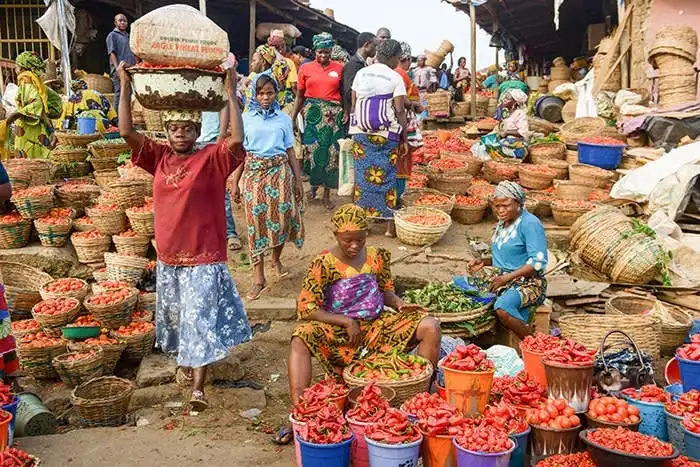
Nigeria’s food industry is projected to reach an estimated value of $233.53 billion in 2025, with a strong annual growth rate of 10.76 percent expected through 2030. This projection highlights the sector’s growing importance in driving economic development and ensuring food security across the country.
The projection was disclosed by Paul Marz, Managing Director of fairtrade Messe, during the 2026 edition of the Nigeria Agrofood Exhibition and Conference held in Lagos. The event, organised in collaboration with Modion Communications, brought together global industry stakeholders to explore solutions for strengthening Nigeria’s agrofood value chain.
The 2026 exhibition, themed Achieving World Class Food Security in Nigeria, recorded its highest international participation yet, featuring 137 exhibitors from 17 countries across four continents. Participants showcased innovations in agro processing, food and beverage technology, packaging, and hospitality, all aimed at improving productivity and efficiency within the sector.
According to Marz, Nigeria remains the largest importer of food and packaging technology in West Africa, with imports valued at 265 million euros and 121 million euros respectively in 2024. He noted that the exhibition continues to serve as a platform for technology transfer, investment opportunities, and supply chain improvements across the region.
However, industry experts raised concerns about major structural challenges, particularly in post harvest management. The President of the Organisation for Technology Advancement of Cold Chain in West Africa, Alexander Isong, emphasized that Nigeria’s biggest bottleneck lies beyond production.
He revealed that the country loses between N3.5 trillion and N5 trillion worth of food annually due to poor storage and inefficient logistics systems. These losses, estimated at 30 to 40 million metric tonnes, are largely attributed to the absence of effective cold chain infrastructure.
Additionally, over 97 percent of Nigeria’s agricultural exports are shipped in raw form, limiting value addition and revenue potential.
Stakeholders agree that addressing post harvest losses, improving storage systems, and investing in processing capacity are critical steps toward unlocking the full potential of Nigeria’s rapidly expanding food market.










Leave a comment